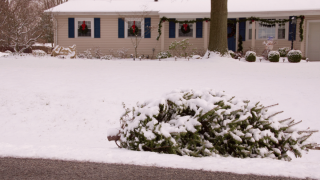
Every January, we get the same question from homeowners across Delaware, Pennsylvania, and New Jersey: how to dispose of a Christmas tree without creating a mess or wasting something that still has value.
I get it. The holidays end fast. One day the tree feels warm and meaningful. The next day it’s dry, leaning a little, and shedding needles across the floor. At that point, most people just want it gone. Still, there are better options than dragging it to the curb and hoping for the best.
From an arborist’s perspective, a real Christmas tree doesn’t suddenly become useless once the lights come down. In fact, it can still serve a purpose if you handle it the right way.
Below, I’ll walk through the most practical and responsible ways to dispose of a real Christmas tree. I’ll also cover a few things that trip people up every year, especially with flocked trees.
Start With the Basics: What to Do Before Disposal
Before you think about pickup days or drop-off sites, slow down and prep the tree.
- First, remove everything. That includes lights, ornaments, hooks, tinsel, garland, and the tree stand. Even one forgotten wire or metal hook can jam recycling equipment or cause a safety issue.
- Next, give the tree a quick shake outside. You’ll knock loose needles and avoid spreading them through your house or car.
- Once the tree is bare, you can choose the disposal method that fits your space, schedule, and local rules.
Common Disposal Methods
Most homeowners use one of the following options. Each works. The best choice depends on where you live and how hands-on you want to be.
Curbside Pickup
In many towns, curbside pickup is the easiest answer to how to dispose of a Christmas tree.
Municipalities often schedule special collection days in early January. Crews collect trees separately from trash and process them as yard waste. In most cases, they chip the trees into mulch or compost.
However, timing matters. Miss the pickup window, and you may have to wait weeks or find another solution. Because of this, check your local waste management website or town bulletin early in the month.
Also, avoid placing the tree in a plastic bag unless your town specifically asks for it. Many programs require trees to be loose and unwrapped.
Drop-Off Centers
If curbside pickup doesn’t work, drop-off centers offer a reliable backup.
Many parks departments, recycling centers, and transfer stations accept Christmas trees for chipping. Some towns even turn the mulch into free compost for residents later in the year.
This option takes more effort, but it gives you flexibility if you miss curbside dates. Just make sure the site accepts trees without fees before loading up your car.
Composting at Home
If you enjoy working in your yard, composting the tree makes sense.
Cut the tree into manageable sections. Smaller branches break down faster and work well as a “brown” layer in compost piles. Larger limbs can line garden beds or serve as erosion control.
That said, patience matters here. Wood decomposes slowly. Think of this as a long-term soil investment, not a quick fix.
Creative Reuse Ideas That Actually Work
Some homeowners want to reuse the tree rather than recycle it immediately. When done thoughtfully, this can benefit your yard and local wildlife.
Wildlife Habitat
One of the simplest reuse ideas involves placing the tree in a quiet corner of your yard.
Laid on its side or propped upright, the tree offers shelter for birds and small animals during harsh winter weather. You can hang suet, seed, or even strings of plain popcorn to create a feeding area.
This approach works best if you live near wooded areas or open space. In dense neighborhoods, check local guidelines to avoid attracting pests you don’t want.
Garden Use
Branches make effective mulch around garden beds and shrubs. They help retain moisture and reduce soil erosion.
Some gardeners also place thicker limbs at the base of raised beds to improve drainage over time. It’s not glamorous, but it’s practical and sustainable.
What About Flocked Trees?
This is where things get tricky.
Flocked trees look beautiful indoors, but the artificial snow coating usually disqualifies them from recycling programs. Many facilities won’t accept them because the chemicals interfere with composting.
Because of this, always check local guidelines before assuming your flocked tree can be recycled. In many cases, disposal means cutting it down and placing it in regular trash.
It’s not ideal, but forcing a flocked tree into a recycling stream causes more harm than good.
Important Steps People Often Miss
Even well-intentioned homeowners make mistakes when figuring out how to dispose of a Christmas tree.
- They forget to remove metal stands.
- They leave lights tangled in branches.
- They assume rules are the same every year.
Meanwhile, local programs change schedules and requirements often. Because of this, a quick check with your town’s waste authority saves time and frustration.
If you’re unsure, ask. A short phone call beats dragging a tree back into your yard after a rejected pickup.
Why Proper Disposal Matters
From an arborist’s standpoint, tree disposal isn’t just about cleanliness. It’s about respecting the material.
A real Christmas tree grew for years before it reached your living room. When recycled or reused properly, it returns nutrients to the soil, supports wildlife, or improves future plant growth.
When handled carelessly, it ends up as unnecessary waste.
That difference may feel small at the individual level. Yet multiplied across thousands of households, it adds up quickly.
When Tree Care Goes Beyond the Holidays
At Strobert Tree Services, we spend most of our time helping homeowners care for living trees. Still, seasonal questions like this matter because they shape how people think about trees year-round.
If you have concerns about tree health, pruning, storm damage, or long-term care, reach out to us. We’re always happy to talk through options and give honest guidance.
And when the holidays end next year, you’ll already know exactly how to dispose of your Christmas tree the right way.