Pine trees stay green year-round, so it can be hard to know when one is truly dead. Many homeowners notice brown needles, thinning branches, or a fading canopy and wonder if the tree can still recover. The good news is that pine trees usually show clear warning signs. Once you know what to look for, it becomes much easier to tell the difference between a stressed pine and a dead one.
In this guide, we explain how to tell if a pine tree is dead or dying, what symptoms matter most, and when it is time to call an arborist.
Start with the needles
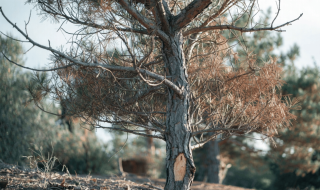
The needles are often the first clue. A healthy pine should have full, green needles across most of the canopy. Some older inner needles may yellow and drop during seasonal needle shed, especially in fall. That is normal.
The problem starts when you see browning in the outer canopy or across large sections of the tree.
- Green outer needles usually mean the branch is still alive.
- Yellowing needles can point to stress.
- Brown needles across the whole tree often suggest serious decline.
- Needles that are dry, brittle, and falling off easily are a bad sign.
If most of the canopy is brown, the tree may already be dead. If only part of the canopy is affected, the tree may still be declining rather than fully dead.
Check the branch tips
Live pine branches should bend slightly before snapping. Dead branches are usually brittle and dry. Look closely at the ends of the branches, because that is where life is easiest to spot.
- Flexible branch tips usually mean living tissue is still present.
- Dry, snapping tips often mean that section is dead.
- Branches with no buds or needles should be inspected more closely.
If dead tips are scattered throughout the tree, the pine may be in decline. If most of the branches are brittle, the tree may be dead.
Look for new growth
Healthy pine trees produce new shoots during the growing season. These soft, lighter green shoots are often called candles. They are one of the best signs that a tree is still alive.
- Fresh candles in spring or early summer point to active growth.
- Sparse new growth can mean stress.
- No new growth at all is a serious warning sign.
A stressed pine may still push out some new growth. A dead pine will not.
Try a scratch test
A scratch test is one of the simplest ways to check a pine tree. Use your fingernail or a small knife to gently scratch a young twig or small branch.
- Green, moist tissue under the bark means that part is alive.
- Brown, dry tissue means that part is dead.
Test a few spots on different branches. One dead branch does not always mean the whole tree is dead. But if multiple areas are dry and brown, the tree is likely beyond recovery.
Inspect the trunk and bark
The trunk can reveal bigger structural or health problems. A dead or dying pine often shows bark loss, trunk wounds, or signs of decay.
- Peeling or falling bark can point to decline.
- Deep cracks may suggest stress or structural failure.
- Small holes can point to insect activity.
- Fungal growth at the base may signal internal decay.
If the bark is loose and the canopy is also brown, the tree may already be dead.
Watch the top of the tree
In many pine trees, decline begins at the top. This is called crown dieback. When the upper canopy starts to thin or turn brown, it often means the tree is struggling with water stress, root damage, disease, or pests.
- A brown top is often one of the clearest warning signs.
- A thin or uneven crown can point to deeper problems.
- One-sided decline may suggest root or trunk damage.
If the top third of the tree is dead, the pine may not recover.
Know the difference between stressed and dead
A stressed pine still shows some life. A dead pine does not. That distinction matters, because stressed trees can sometimes be saved if the cause is found early.
Signs a pine tree is stressed
- Some green needles remain.
- There is limited new growth.
- Only part of the canopy is affected.
- Scratch tests show green tissue in some branches.
Signs a pine tree is dead
- Most or all needles are brown.
- Branches snap easily.
- There is no new growth.
- Scratch tests show dry, brown tissue.
- The bark is falling off or decay is visible.
Common reasons pine trees die
Pine trees can decline for many reasons. Sometimes the issue is above ground. Sometimes it starts in the roots.
- Drought stress
- Poor drainage
- Root damage from construction
- Insect infestations
- Fungal disease
- Storm or lightning damage
- Soil compaction
- Heat stress
That is why a professional inspection matters. The symptoms may look similar even when the cause is very different.
When to call an arborist
If more than half of the tree is brown, if the tree is leaning, or if dead branches are hanging over your home, driveway, or sidewalk, it is time to call a certified arborist.
A pine tree can become hazardous quickly once it dies. Dry branches break more easily. The trunk can weaken over time. In some cases, the whole tree can fail without much warning.
An arborist can tell you whether the tree is dead, dying, or still recoverable. They can also recommend treatment, pruning, or removal if needed.
Final thoughts
The best way to tell if a pine tree is dead is to look for a pattern. Brown needles alone are not enough. But when you also see brittle branches, no new growth, dry tissue under the bark, and visible decline in the trunk or crown, the tree is likely dead.
If you are unsure, do not wait too long. A stressed pine may still be saved. A dead pine should be addressed before it becomes a safety risk.
Strobert Tree Services can inspect your pine tree, identify the cause of decline, and recommend the safest next step for your property.