The best time to transplant a tree is during dormancy, either in early spring before the buds break or in late fall after the leaves drop. During dormancy the tree is not actively growing, so moving it puts the least stress on the roots. For most trees in Delaware and Pennsylvania, early spring is the ideal window, with fall a strong second choice.
That is the short answer. But timing is only part of a successful transplant. The size of the tree, the species, how you dig the root ball, and the care you give it afterward all matter just as much. Here is what you need to know before you move a tree.
When Is the Best Time to Transplant a Tree?
The best time to transplant a tree is while it is dormant, in early spring before new growth starts or in late fall after the leaves have fallen. A dormant tree is not pushing new leaves or shoots, so its energy can go toward re-establishing roots instead of supporting a full canopy. That is what gives a transplanted tree its best chance to recover.
Early spring is usually the top choice because it gives the roots a full season to establish before the heat of summer. Fall works well too, as long as the tree is moved after leaf drop while the soil is still warm enough for some root growth before winter.
This is different from planting a new nursery tree. Transplanting means digging up an established tree and moving it, which disturbs far more of the root system, so the timing matters even more. If you are putting in new stock instead, see our guide on the best time to plant trees.
Why Does Dormancy Matter for Transplanting?
Dormancy matters because a tree loses a large part of its root system when it is dug up, and a dormant tree needs far less water and energy than an actively growing one. Moving a tree while it is dormant means the reduced roots are not being asked to support a full canopy of leaves at the same time.
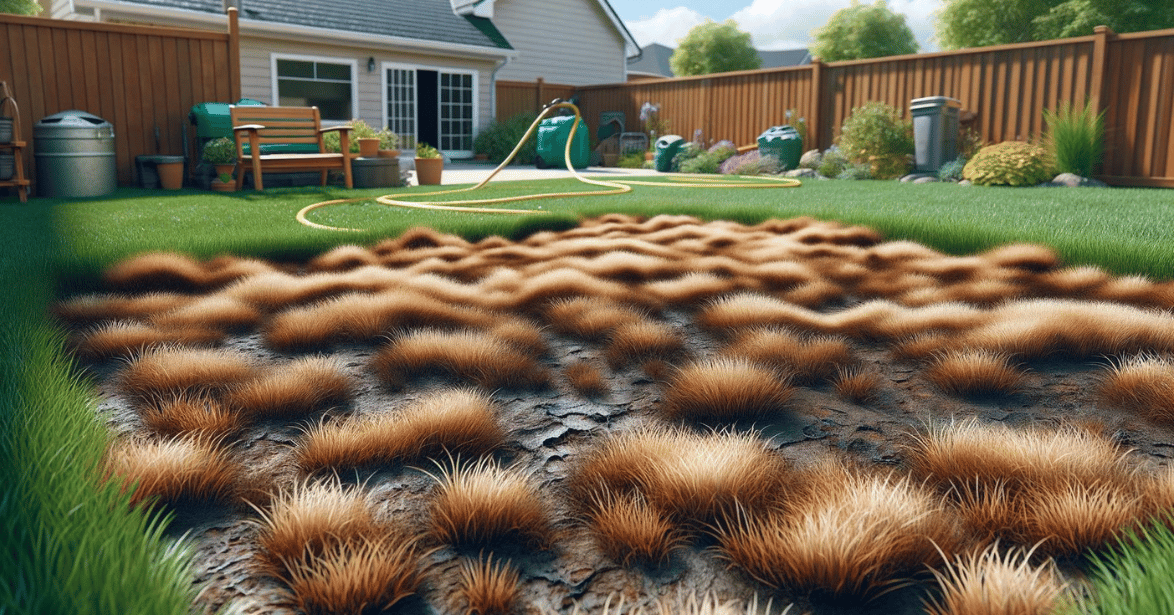
When you transplant during active growth in summer, the tree is transpiring heavily through its leaves while its root system has just been cut back. That mismatch is what leads to severe transplant shock, wilting, and sometimes death. Dormancy avoids that conflict.
Should I Transplant in Spring or Fall?
Both spring and fall work, but the better choice depends on the species. Early spring suits almost every tree and is the safest option for species that are slower to recover. Fall is a good choice for many hardy deciduous trees, but some species do not root well before winter and are better moved only in spring.
A few general guidelines:
- Early spring (before bud break): the broadest, safest window. Good for nearly all species, and the best choice for oaks, magnolias, birches, and other trees that transplant less easily.
- Fall (after leaf drop): works well for many tough, established deciduous trees like maples and lindens, giving roots time to settle before spring.
Because the right season varies by species, it is worth checking the specific tree. Our post on the best time to transplant oak trees is a good example of why species matters.
What About Transplanting Evergreens?
Evergreens are usually best transplanted in early spring or early fall, avoiding the peak heat of summer and the deep cold of winter. Because evergreens keep their needles year-round, they continue losing moisture through their foliage even in winter, so they need enough time to re-establish roots before facing seasonal stress.
Pines, spruces, and other conifers have their own timing and handling needs. Our guide on transplanting pine trees covers them in detail, and our comparison of deciduous versus coniferous trees explains why the two groups behave so differently.
How Big a Tree Can Be Transplanted?
Smaller trees transplant far more successfully than large ones. A young tree with a trunk a couple of inches across can often be moved with a good chance of survival. Large, established trees can be moved, but they require advance root pruning, specialized equipment, and professional handling, and the risk goes up with size.
The reason is simple. A tree's roots extend well beyond what you can dig up. The bigger the tree, the larger the share of its root system you leave behind, and the harder recovery becomes. For large trees, arborists often root-prune a year in advance, cutting a circle around the tree to encourage a dense, compact root ball that moves better when the time comes.
How Do You Transplant a Tree?
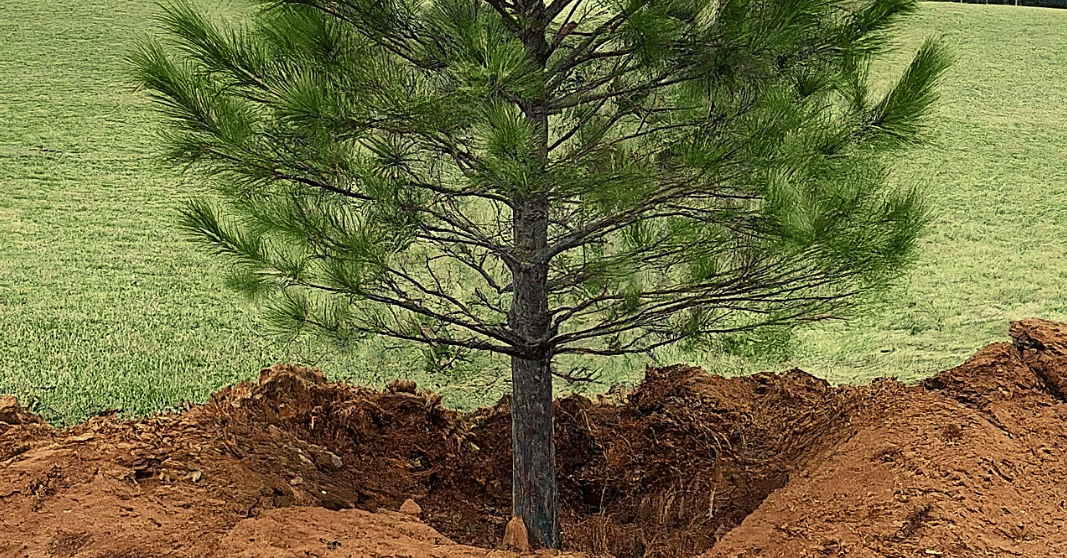
Transplanting a tree means digging a wide root ball, keeping the roots intact and moist, and replanting at the correct depth in a well-prepared hole. Done carefully during dormancy, the process gives the tree the best chance to recover. Rushed or done in the wrong season, it often fails.
The basic steps:
- Dig a wide root ball. A general rule is roughly 10 to 12 inches of root ball width for every inch of trunk diameter. Wider is better, because more roots mean a better chance of survival.
- Keep the roots moist and protected. Do not let the root ball dry out or fall apart during the move. Wrap it if the tree is traveling any distance.
- Replant at the right depth. The root flare, where the trunk widens into the roots, should sit at or just above ground level. Planting too deep is a common cause of slow decline.
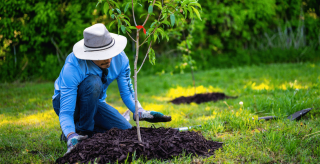
- Water thoroughly and mulch. Water deeply after planting, then keep the soil consistently moist through the first seasons. Apply mulch, but keep it off the trunk. Our guide on mulching around a tree explains how to do it right.
How Do You Reduce Transplant Shock?
You reduce transplant shock by moving the tree during dormancy, keeping as many roots as possible, planting at the correct depth, and watering consistently through the first one to two years. Transplant shock is the period of stress while a tree rebuilds its root system, and good aftercare is what carries it through.
Consistent watering is the single most important thing you can do after transplanting. A newly moved tree cannot pull enough moisture from its reduced roots during dry spells, so it depends on you. Our guides on how much water a tree needs and on fixing transplant shock walk through exactly what a recovering tree needs.
When Should You Not Transplant a Tree?
Avoid transplanting a tree during the heat of summer, when it is actively growing and losing moisture through its leaves, and during deep winter, when the ground is frozen. Both put extreme stress on a tree with a freshly reduced root system. You should also avoid moving a tree that is already stressed, diseased, or in decline.
If a tree is struggling, moving it rarely helps and often finishes it off. In those cases, it is better to address the underlying health problem first, or to consider whether replacement makes more sense than relocation.
Frequently Asked Questions
What is the best month to transplant a tree?
In Delaware and Pennsylvania, the best months are generally March and early April, before buds break, or late October through November, after leaves drop. The exact window shifts with the weather each year. The key is to move the tree while it is dormant and the soil is workable, not frozen and not baked by summer heat.
Can you transplant a tree in summer?
Transplanting in summer is risky and usually not recommended. During summer the tree is actively growing and losing water through its leaves, while its root system has just been cut back by the move. That combination leads to severe transplant shock. If a summer move is unavoidable, it requires careful handling, heavy watering, and still carries a higher chance of failure.
How long does it take a transplanted tree to recover?
Most transplanted trees take one to three years to fully re-establish their root systems, depending on size and species. A common guideline is about one year of recovery for every inch of trunk diameter. During that period the tree needs consistent watering and care. Slower growth and smaller leaves in the first year or two are normal signs of recovery, not failure.
What is the survival rate of a transplanted tree?
Survival depends heavily on size, species, timing, and aftercare. Small trees moved during dormancy with a good root ball and consistent watering have an excellent chance of survival. Large trees, poor timing, or neglected watering lower the odds considerably. Proper technique and follow-up care make the difference between a tree that recovers and one that declines.
Should I fertilize a tree right after transplanting?
It is usually best to focus on water, not fertilizer, right after transplanting. A freshly moved tree needs to rebuild roots, and heavy fertilizer can push top growth the reduced root system cannot support. Consistent watering and proper mulching do far more for recovery in the first season. Any fertilization is better considered once the tree shows signs of establishing.
Is it better to transplant a tree or plant a new one?
For small trees, transplanting is often worthwhile and cost-effective. For large trees, the cost, equipment, and risk of transplanting can outweigh simply planting a new, appropriately sized tree that will establish quickly. The decision comes down to the tree's size, value, health, and how important that specific tree is to your landscape.
Give Your Tree the Best Chance
Transplanting comes down to timing and technique. Move the tree while it is dormant, take as much of the root system as you can, plant it at the right depth, and water it faithfully through the first couple of years. Get those right, and most trees recover well. Get the timing wrong, and even a healthy tree can struggle.
If you have a tree you want moved, especially a large or valuable one, our ISA-Certified Arborists at Strobert Tree Services can assess whether it is a good candidate, handle the transplant with the right equipment, and set it up to recover with proper plant health care. We serve Delaware, Pennsylvania, and New Jersey. Call us at 1-800-TREE-SERVICE or request a free consultation online.