
Beech leaf disease is becoming a serious concern across the eastern United States. Arborists are seeing it more often in both forests and residential landscapes. At Strobert Tree Services, we receive regular calls from homeowners who notice something is wrong with their beech trees. Leaves look different. Growth slows. The canopy thins.
Beech leaf disease, often shortened to BLD, is not a cosmetic issue. It is a progressive and potentially fatal disease. Understanding what it is and how it works is the first step toward protecting your trees.
Understanding Beech Leaf Disease
Beech leaf disease is caused by a microscopic nematode called Litylenchus crenatae mccannii. This organism is so small it cannot be seen without magnification, yet it causes visible and lasting damage. The nematode feeds inside beech leaf buds, long before leaves emerge in spring.
Because the damage begins early, the leaves are already compromised. Over time, this repeated stress weakens the tree. Leaf production declines. Branches die back. In many cases, the tree eventually dies.
Young beech trees tend to decline the fastest. Mature trees often survive longer, but they still lose vigor year after year. Some trees appear to tolerate the disease better than others, but full recovery is rare.
Recognizing the Symptoms
Symptoms of beech leaf disease usually appear in late spring or early summer. They worsen with each growing season.
The earliest sign is dark banding on the leaves. These bands appear between the veins and are easiest to see when sunlight shines through the leaf. At this stage, the tree may still look healthy from a distance, which is why the disease is often missed early on.
As the disease progresses, leaves begin to change shape and texture. They may become thick and leathery. Curling and puckering are common. Leaves often appear smaller than normal and may look distorted or shriveled.
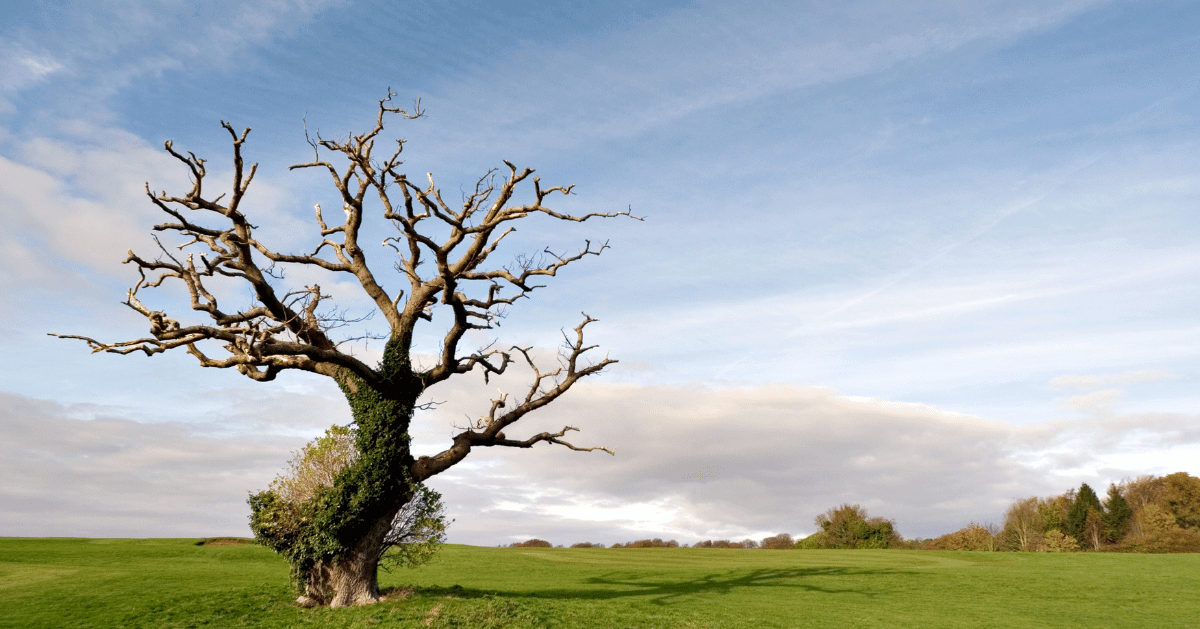
Later in the season, premature leaf drop may occur. The canopy thins. Some trees look as if autumn has arrived months early. Bud damage also becomes more noticeable. Buds may dry out, crack, or fail to open altogether, further reducing leaf coverage the following year.
What Causes Beech Leaf Disease
The cause of beech leaf disease is now well established. The nematode overwinters inside beech buds. In spring, it feeds on developing leaf tissue, disrupting normal growth. As the season progresses, the nematodes move back into the buds, where they remain through winter. This cycle repeats every year.
The exact method of spread is still being studied. Researchers believe the nematode moves from the leaf to the bud naturally, but other factors may also contribute. Rain splash, wind, wildlife, insects, and even human movement of infected plant material are all possible contributors. Because spread is not fully understood, preventing exposure is difficult.
Impact on Beech Trees and Forests
Beech leaf disease affects multiple species of beech, including American, European, and Oriental beech. Both forest-grown and ornamental landscape trees are susceptible.
Young beech trees often die within one to three years of infection. Mature trees may survive four to ten years, though their health steadily declines. While some trees show partial resistance, most continue to worsen without intervention.
This disease is especially concerning because beech trees play an important ecological role. They provide food and habitat for wildlife and help maintain forest structure. According to the US Forest Service, beech leaf disease is one of the most serious emerging threats to eastern U.S. forests, particularly due to high mortality in understory beech.
Management and Treatment Options
There is currently no cure for beech leaf disease. However, management options are available for certain trees, especially high-value ornamental specimens in residential settings.
Professional trunk injections have shown promise. Thiabendazole injections, such as those using Arbotect 20-S, are the most studied treatment option to date. These injections may help improve leaf quality, slow canopy decline, and reduce symptom severity when applied early.
Potassium phosphite injections are also being used as a supportive treatment. These products help stimulate the tree’s natural defense systems. Results vary depending on tree health, infection severity, and timing.
It is important to understand the limits of treatment. Injections do not reverse existing damage. They are not practical for forest-wide application. Treatments are most effective when started early and applied by certified arborists using proper equipment.
Resistance and Breeding Efforts
Researchers are also studying whether some beech trees show natural resistance to beech leaf disease. Ongoing work by groups such as the Great Lakes Basin Forest Health Collaborative and the U.S. Forest Service focuses on identifying lingering beech that survive longer despite nematode pressure. These efforts include beech resistance breeding programs, breeding selection programs, and testing genetic clones for signs of genetic resistance. Japanese beech (Fagus crenata) has shown some tolerance and is being studied alongside grafted trees and pest-resistant trees. While this research is still developing, it may play an important role in future replanting efforts and long-term forest recovery.
What Homeowners Should Watch For
Early detection is critical. Homeowners with beech trees should inspect leaves each spring and watch for changes in appearance. Dark banding, leaf distortion, and thinning canopies are all warning signs.
Avoid moving beech branches, firewood, or plant material from affected areas. This may help reduce accidental spread. Injection treatments should never be attempted without professional guidance, as improper application can further harm the tree.
Call Strobert Tree Services for Tree Healthcare
Beech leaf disease is complex, and every tree responds differently. Accurate diagnosis and professional management are essential.
At Strobert Tree Services, our certified arborists stay current with emerging research and treatment options. We provide expert tree healthcare focused on preserving tree health whenever possible.
If you are concerned about beech leaf disease on your property, contact Strobert Tree Services. We can evaluate your trees, explain your options, and help you make informed decisions about long-term care.