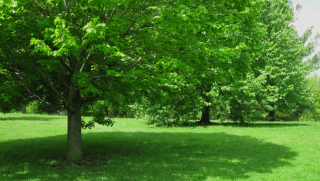
A good shade tree is one of the best investments you can make in your property. It cools your house in summer, cuts your energy bills, raises your home's value, and gives you something that gets better every single year. But the tree you plant today is a decision you live with for decades, and the wrong choice creates problems that are expensive to undo. After planting and caring for trees across Delaware and Pennsylvania for years, here are the shade trees I recommend, the ones I steer people away from, and what to think through before you dig the hole.
What are the best shade trees to plant in Delaware and Pennsylvania?
The best shade trees for Delaware and Pennsylvania are native, adaptable species like red maple, red oak, tulip poplar, American beech, and river birch. These trees handle the region's climate and soil well, grow to provide substantial canopy, and support local ecology. The right choice depends on your yard size, soil drainage, sunlight, and how close the tree will be to your house.
Top shade trees for the region
Red maple
Red maple is one of the most reliable and widely planted shade trees in the Mid-Atlantic, and for good reason. It grows at a moderate to fast rate, adapts to a wide range of soil conditions including wet spots, and delivers brilliant red fall color. Mature height runs 40 to 60 feet with a rounded canopy that casts dense, even shade. It is a strong all-around choice for most yards that have the room.
One caution: red maples have shallow, spreading root systems, so give them distance from driveways, sidewalks, and foundations. Our guide on the best trees to plant near a house covers safe spacing in detail.
Red oak
Northern red oak is a classic shade tree that grows faster than most people expect for an oak, often two feet per year when young. It develops into a broad, strong-limbed tree reaching 60 to 75 feet, with good russet-red fall color and heavy acorn production that supports wildlife. Oaks are among the most valuable trees you can plant for local ecology, supporting more species of caterpillars and birds than almost any other tree.
Oaks are a long-term commitment and worth the wait. They are also worth understanding before you plant, since oak wilt is a serious regional disease and pruning timing matters. Our post on when to trim oak trees explains the timing rules that protect them, and oak tree identification helps you tell the varieties apart.
Tulip poplar
If you want shade fast, tulip poplar is one of the quickest-growing native options, capable of three feet or more per year in good conditions. It grows tall and straight, often reaching 70 to 90 feet, with distinctive four-lobed leaves, bright yellow fall color, and tulip-shaped orange and green flowers in late spring. It is a Pennsylvania and Delaware native that thrives in deep, moist, well-drained soil.
The tradeoff for fast growth is somewhat weaker wood, so tulip poplars benefit from good structural pruning when young to develop strong form. They also need space, both for their height and their spreading roots, making them better suited to larger properties than small suburban lots.
American beech
American beech is a magnificent, long-lived shade tree with smooth gray bark and a dense, low-branching canopy that casts some of the deepest shade of any regional tree. It grows slowly, reaching 50 to 70 feet over many decades, and holds its coppery leaves well into winter on younger trees. For a homeowner planting a legacy tree meant to outlast them, beech is a beautiful choice.
Beech does have vulnerabilities worth knowing about. Beech leaf disease is an emerging threat in our region, and the tree's shallow roots and dense shade make it difficult to grow anything beneath it. Our post on beech leaf disease covers what to watch for if you plant or already have one.
River birch
River birch is an excellent choice for yards with wet or poorly draining soil where other shade trees struggle. It tolerates standing water and heavy clay far better than most, grows quickly, and features striking peeling, cinnamon-colored bark that provides winter interest. Mature height is 40 to 70 feet, often grown as a multi-stemmed specimen. It is also more resistant to the bronze birch borer than the white-barked birches, making it the smart birch choice for our region.
River birch does drop twigs and catkins and can be a bit messy, and its roots seek water aggressively, so keep it away from septic systems and drain lines. Our post on how far trees should be from a septic tank covers safe distances.
Other strong options
A few more shade trees that perform well here, depending on your specific conditions:
- Sugar maple for spectacular orange-red fall color, though it prefers well-drained soil and does not tolerate road salt or compaction well
- Sweetgum for fast growth and multi-colored fall foliage, if you do not mind the spiky seed balls
- Ginkgo for a tough, pest-resistant, pollution-tolerant tree with clean golden fall color; plant only male cultivars to avoid the messy, foul-smelling fruit
- Black gum (tupelo) for outstanding early red fall color and excellent wildlife value in a moderate-sized tree
- American sycamore for a fast-growing, massive shade tree on large properties with room to spare
Shade trees to think twice about
Some popular fast-growing trees create long-term problems that outweigh their quick shade. I steer homeowners away from these:
| Tree | The problem |
|---|---|
| Bradford / Callery pear | Invasive, weak structure that splits in storms, foul-smelling flowers |
| Silver maple | Fast but brittle, aggressive roots that crack pavement and invade pipes |
| Norway maple | Invasive, casts shade so dense nothing grows beneath it, shallow roots |
| Tree of Heaven | Highly invasive, weak wood, hosts spotted lanternfly |
| Mimosa (silk tree) | Invasive, short-lived, messy, prone to disease |
| Willow | Aggressive water-seeking roots that damage pipes and foundations |
The Tree of Heaven point is especially relevant right now because it is the preferred host of the spotted lanternfly, which has become a major pest across Pennsylvania and Delaware. Our post on getting rid of spotted lanternfly covers that connection.
How to choose the right shade tree for your yard
The best shade tree is the one that fits your specific conditions. Before choosing, work through these factors:
Available space
This is the mistake I see most often: a tree planted too close to a house, driveway, or power line because nobody pictured it at full size. A tree that is charming at eight feet becomes a serious problem at sixty. Look up before you plant, and picture the mature canopy spread, not the sapling. For power line areas, choose smaller trees. For open yards, the large shade trees have room to shine. Our guide on planting trees near your house covers safe distances by tree size.
Soil and drainage
Does your soil stay wet, or does it drain fast and dry out? River birch, red maple, and sweetgum tolerate wet soil. Sugar maple, oak, and beech prefer well-drained ground. Planting a moisture-loving tree in dry soil, or the reverse, sets it up to struggle no matter how well you care for it. If you are not sure about your soil, a simple drainage test or a soil evaluation tells you what you are working with.
Sunlight
Most shade trees want full sun, at least six hours a day, to develop properly. A shade tree planted in a shady spot grows thin and weak. Match the tree to the light the location actually gets.
Growth rate versus longevity
Fast-growing trees give you shade sooner but often have weaker wood and shorter lifespans. Slower-growing trees like oak and beech take patience but reward you with strength, longevity, and value. A good approach on some properties is planting both: a fast grower for near-term shade and a slow, strong tree that becomes the long-term centerpiece as the fast one ages out.
When and how to plant a shade tree
Timing and technique both matter for giving a new shade tree the best start. Fall and early spring are the ideal planting windows in our region, when cooler temperatures and reliable moisture let the tree establish roots before facing summer heat. Our post on the best time to plant trees covers the seasonal timing, and how to help newly planted trees survive and thrive walks through proper planting depth, mulching, and the watering routine a young tree needs through its first two years.
The single most common planting mistake is planting too deep. A tree's root flare, where the trunk widens into the roots, should sit at or slightly above the soil line. Planting deeper suffocates the roots and slowly kills the tree over several years. Proper depth, good mulching without piling mulch against the trunk, and consistent water through the establishment period make the difference between a tree that thrives and one that limps along.
Frequently asked questions
What is the fastest-growing shade tree for Pennsylvania and Delaware?
Tulip poplar and American sycamore are among the fastest-growing native shade trees, capable of three feet or more per year in good conditions. Red maple and river birch also grow quickly while offering better structure for smaller yards. Fast growth usually comes with somewhat weaker wood, so fast-growing trees benefit from structural pruning when young to develop strong, storm-resistant form.
What is the best shade tree to plant near a house?
For planting near a house, choose a tree with a non-aggressive root system and a mature size that fits the space, such as a red maple, serviceberry, or a smaller ornamental for tight spots. Keep large shade trees at least 15 to 20 feet from the foundation, and avoid aggressive-rooted species like silver maple and willow entirely near structures. Always picture the tree at full mature size before selecting a planting spot.
Which shade trees have the least messy leaves and fruit?
Red maple, ginkgo (male cultivars only), and red oak are relatively low-mess shade trees. Ginkgo drops its leaves in a single tidy window. Avoid sweetgum if mess is a concern, since it produces spiky seed balls, and avoid female ginkgo, which drops foul-smelling fruit. Some leaf and twig drop is unavoidable with any large tree, but species selection can significantly reduce cleanup.
How long does it take for a shade tree to provide shade?
A fast-growing shade tree like tulip poplar or red maple can provide meaningful shade in five to seven years, while slower species like oak and beech take considerably longer to develop a full canopy. Starting with a larger nursery tree, often sold as a two to three inch caliper, gives you a head start of several years compared to planting a small sapling. Patience pays off, since a well-chosen tree keeps improving for decades.
Are native shade trees better than non-native ones?
Generally, yes. Native shade trees like oak, red maple, and tulip poplar are adapted to the region's climate and soil, require less intervention once established, and support far more local wildlife than non-native species. Native oaks alone support hundreds of species of caterpillars that feed birds. Many problem trees homeowners regret planting, including Norway maple and Callery pear, are non-native invasives that crowd out healthier native options.
Should I plant a shade tree myself or hire a professional?
Smaller saplings are reasonable to plant yourself if you follow proper depth and watering guidance. Larger caliper trees, which give you faster shade, are heavy, awkward, and easy to plant incorrectly, and a planting mistake on an expensive tree is costly to fix. For larger trees or if you want the planting done right the first time, professional planting ensures correct depth, placement, and establishment care that protects your investment.
Plant the right tree in the right place
There is an old saying in arboriculture: the best time to plant a tree was twenty years ago, and the second best time is now. Choosing well matters just as much as choosing to plant at all. Match the tree to your space, soil, and sunlight, avoid the fast-but-problematic species, and give it a proper start, and you will have shade, beauty, and value that grows for generations.
If you want help selecting the right shade tree for your specific property, or you want a new tree planted correctly and set up to thrive, our ISA-Certified Arborists at Strobert Tree Services can walk your yard, assess the conditions, and recommend the species that will do best. We serve Delaware, Pennsylvania, and New Jersey, and our plant health care team can keep your new tree healthy through its critical establishment years. Call us at 1-800-TREE-SERVICE or request a free consultation online.