
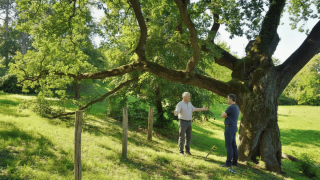
Trees do not care about property lines. Branches reach over the fence, roots spread under it, and eventually a homeowner is standing in the yard wondering exactly what they are allowed to cut. This comes up constantly, and the answers surprise people. You have more rights than you might think in some situations and far fewer in others. Cutting the wrong thing can cost you thousands of dollars in damages. Here is what the law actually allows in Delaware, Pennsylvania, and New Jersey, and where the lines really fall.
How close to the property line can I cut trees?
You can trim tree branches and roots up to your property line, but no further. You cannot cross onto a neighbor's property to cut, and you cannot remove or kill a tree whose trunk stands on their land, even if most of it hangs over your yard. Cutting past the line or harming a neighbor's tree can make you liable for double or triple the tree's value.
Who owns a tree near the property line?
Tree ownership is determined by one thing: where the trunk stands. If the trunk is entirely on your property, the tree is yours, even if its branches and roots extend well into your neighbor's yard. If the trunk is entirely on your neighbor's property, it is their tree, regardless of how much of it hangs over your side. This rule is consistent across Delaware, Pennsylvania, and New Jersey.
Things get more complicated when the trunk itself straddles the boundary line. When any part of the trunk grows on both properties, the tree is generally considered jointly owned by both homeowners. In that case, neither owner can remove or seriously damage the tree without the other's consent. That mutual ownership is a frequent source of disputes, so it is worth knowing where you stand before touching a boundary tree.
What am I allowed to cut?
Your rights depend entirely on what you are cutting and where it sits relative to the line.
Overhanging branches
You have the legal right to trim branches from a neighbor's tree that extend over your property, but only up to the property line. You own the airspace above your land, and branches intruding into it can be cut back to the boundary. However, this right comes with an important limit: you cannot cut in a way that damages or kills the tree. If your trimming harms the tree's health or destroys its structural integrity, you can be held liable even though the branches were on your side.
You also cannot reach or lean across the property line to make your cuts, and you cannot enter your neighbor's yard to do the work without their permission. The trimming has to happen from your side of the line. Our post on whether you can cut tree limbs that hang over your property covers this specific situation in more detail.
Encroaching roots
Roots follow a similar but stricter rule. You can cut roots that cross onto your property, but only if they are causing actual damage, and only up to the property line. The key difference from branches is that root cutting carries a much higher risk to the tree's stability and health. Cutting major roots can destabilize a tree, making it a falling hazard, and can also kill it outright, which brings you right back into liability territory.
Courts have held that a homeowner's right to cut encroaching roots is tempered by a duty to act reasonably. Cutting roots aggressively enough to kill or topple a neighbor's tree, even to protect your driveway or foundation, can make you responsible for the loss. Our post on whether cutting tree roots will kill the tree explains how much root loss a tree can actually survive, which matters a great deal before you start digging.
The whole tree
You cannot cut down a neighbor's tree, no matter how much of it hangs over your property. Even if 90 percent of the canopy is on your side, if the trunk stands on your neighbor's land, the tree is theirs and removing it without permission is illegal. This is the mistake that costs people the most money.
What happens if I cut too far?
The penalties for cutting a neighbor's tree, crossing the property line, or damaging a tree through improper trimming are severe, and they are designed to be. Most states impose what are called treble damages for wrongful tree cutting, meaning you can be liable for double or triple the tree's actual value. For a mature shade tree, replacement value routinely runs into the thousands of dollars. For a large ornamental or landmark tree, the figure can reach tens of thousands.
On top of the tree's value, you may be responsible for your neighbor's attorney fees in some jurisdictions. The combination of treble damages plus legal costs turns what felt like a simple yard cleanup into an expensive legal problem. This is why knowing the boundary and staying well within it matters so much. Our post on the penalty for cutting a tree without a permit covers the municipal side of this, which stacks on top of any civil liability to a neighbor.
How do I know exactly where my property line is?
This is the part people skip, and it causes most of the trouble. A fence is not always on the property line. Neither is a hedge, a driveway edge, or where you assume the line falls. Before cutting anything near a boundary, especially anything that could damage a neighbor's tree, you need to know where the line actually is.
The reliable options:
- Your property survey. If you have a recent survey from when you bought the home, it shows the boundaries precisely.
- A new survey. If you do not have one or the old one is unclear, a licensed surveyor can mark the line. It costs money, but far less than treble damages on a mature tree.
- Your county property records. These can help but are usually not precise enough on their own for cutting decisions near a valuable tree.
When a tree is valuable and close to the line, the cost of a survey is cheap insurance against a much larger liability.
What if the tree is a hazard?
A dangerous tree changes the conversation, but it does not give you the right to take matters into your own hands. If your neighbor's tree is dead, leaning, or visibly hazardous and threatens your home, the correct process is:
- Notify your neighbor in writing. This is the single most important step. A dated written notice documenting that you identified the hazard establishes a record. If the tree later fails and causes damage, that written notice can shift liability to your neighbor, because they knew about the danger and failed to act.
- Involve your municipality if they refuse. Many towns in Delaware and Pennsylvania have ordinances covering hazardous property conditions. Local code enforcement can inspect the tree and, in some cases, compel the owner to address it.
- Check with your HOA. If you share a homeowners association, its rules may require the neighbor to maintain or remove a hazardous tree.
Our post on who is responsible when a neighbor's tree falls on your house covers exactly how that written notice affects liability, and it is worth reading before a storm forces the issue. Knowing the red flags that a tree needs to come down helps you document a genuine hazard credibly.
The smarter approach: talk to your neighbor first
The law gives you certain rights, but exercising them aggressively is often the worst way to handle a tree that crosses a property line. Trimming only your side of a tree can leave it lopsided and unhealthy, which helps no one and can even trigger liability if the tree suffers. A tree trimmed properly all the way around stays healthier and looks better for both households.
In most cases, the best outcome comes from a simple conversation. Neighbors who split the cost of professional trimming, or agree to let a tree service work from both yards, end up with a healthier tree, a cleaner result, and a relationship intact. A professional arborist can trim the entire tree correctly, navigate the boundary questions, and give both parties documentation of what was done. That is a far better position than two homeowners each hacking at their own side of the same tree.
Quick reference: what you can and cannot do
| Action | Allowed? |
|---|---|
| Trim overhanging branches up to the property line | Yes, if it does not harm the tree |
| Cut encroaching roots on your side causing damage | Yes, but only up to the line and reasonably |
| Reach or lean across the line to cut | No, that is trespass |
| Enter neighbor's yard to trim without permission | No |
| Cut down a tree whose trunk is on neighbor's land | No, even if most of it overhangs your yard |
| Trim in a way that kills or destabilizes the tree | No, you become liable for damages |
| Remove a boundary tree (trunk on both properties) | No, not without the co-owner's consent |
| Cut your own tree that overhangs a neighbor's yard | Yes, it is your tree |
Frequently asked questions
Can I cut my neighbor's tree branches that hang over my yard?
Yes, you can trim branches that extend over your property, but only up to the property line and only if the trimming does not harm the tree's health or stability. You cannot cross onto your neighbor's property to cut, and you cannot cut the branches back past the boundary. If improper trimming kills or damages the tree, you can be held financially liable even though the branches were on your side.
How much of a neighbor's tree can I legally cut?
You can legally cut the portion of branches and roots that cross onto your property, up to the property line, provided the cutting does not damage or kill the tree. You cannot cut any part of the tree on your neighbor's side, and you cannot remove the tree itself if the trunk stands on their land. The line and the tree's health are the two limits you cannot cross.
What happens if I accidentally kill my neighbor's tree while trimming?
Even accidental damage can make you liable. Most states impose double or triple the tree's value as damages for wrongful cutting or harm, and mature trees are often worth thousands of dollars. Courts sometimes reduce damages when the harm was a genuine mistake rather than intentional, but you can still owe a significant sum. This is why hiring a professional who understands proper cutting technique and boundary rules protects you financially.
Can I make my neighbor trim their tree?
Not directly in most cases. You cannot force a neighbor to trim a healthy tree simply because its branches or leaves bother you. However, if the tree is a genuine hazard threatening your property, you can notify them in writing, involve your municipality's code enforcement, or, if applicable, your HOA. Documenting a real safety hazard in writing is the key step that can eventually compel action or shift liability.
Who is responsible for leaves and debris from a neighbor's tree?
You are. Leaves, twigs, fruit, and other natural debris that fall onto your property from a neighbor's tree are considered your responsibility to clean up, even when they clog your gutters or cover your yard. A tree owner is not liable for natural debris from a reasonably maintained tree. If the debris is from dead or unmaintained branches, the situation can change, but ordinary leaf fall is your cleanup.
Do I need permission to trim a boundary tree?
Yes. When a tree's trunk straddles the property line, both homeowners jointly own it, and neither can trim, treat, or remove it in a way that harms it without the other's consent. You can maintain your side, but significant work requires agreement. The safest approach with any boundary tree is a written agreement between both owners before work begins, ideally with a professional arborist handling the actual trimming.
Know the line before you cut
Tree work near a property line is one of the few situations where a well-meaning weekend project can turn into a five-figure liability. The rules are not complicated, but they are strict, and the penalties for getting them wrong are steep. Trim only your side, only to the line, and never in a way that damages the tree. When in doubt about the boundary or the tree's health, get the line surveyed and the tree assessed before anyone picks up a saw.
If you have a tree crossing a property line and you are not sure how to handle it, our ISA-Certified Arborists at Strobert Tree Services can assess the tree, advise on the boundary considerations, and perform the trimming properly so both you and your neighbor end up with a healthy tree and no liability. We work across Delaware, Pennsylvania, and New Jersey and can coordinate with both households when a shared tree is involved. Note that this article is general information, not legal advice; for a specific dispute, consult a real estate attorney in your state. For the tree work itself, call us at 1-800-TREE-SERVICE or request a free estimate online.