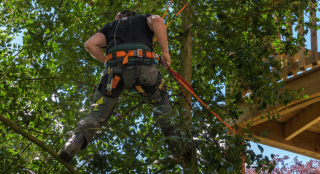
Tree trimming costs $75 to $1,800 per tree, with most homeowners paying around $400 to $500 for a single medium tree. Small trees under 30 feet typically run $75 to $450, medium trees $200 to $800, and large trees over 60 feet $800 to $1,800 or more. The biggest cost factor is tree size, followed by location, accessibility, tree health, and how many trees you have done at once.
That is the short answer. Now here is what actually drives the price, so you can read a quote and know whether it is fair before you sign anything.
How much does tree trimming cost by size?
Tree size is the single biggest factor in what you pay, because a taller tree takes more time, more equipment, and more skill to trim safely. Here is what to expect in the Delaware and Pennsylvania area:
| Tree size | Typical height | Estimated cost | Common examples |
|---|---|---|---|
| Small | Under 30 ft | $75 to $450 | Dogwood, Japanese maple, crape myrtle |
| Medium | 30 to 60 ft | $200 to $800 | Mature maple, birch, crabapple |
| Large | 60 to 80 ft | $800 to $1,500 | Oak, tulip poplar, large pine |
| Very large | Over 80 ft | $1,500 to $2,500+ | Mature oak, large silver maple, old pine |
These ranges assume reasonable access and a tree in decent condition. Anything that complicates the job pushes the price toward the higher end. For the full picture on removal instead of trimming, see our guide on how much tree removal costs.
What factors affect the cost of tree trimming?
Two trees of the same height can be quoted very differently, and these are the reasons why:
- Accessibility. A tree in an open yard is straightforward. A tree wedged between your house and a fence, overhanging a roof, or growing near power lines needs careful rigging and more time, which raises the cost.
- Tree species. Dense hardwoods like oak take more effort than a soft-wooded ornamental. Species with heavy canopies or brittle limbs cost more to work on.
- Tree health. A diseased, damaged, or storm-weakened tree requires extra care and slower, safer work, which adds to the price.
- Number of trees. Most companies drop the per-tree price when the crew is already on site, often around $100 less for each additional tree in the same visit.
- Amount of trimming. Light shaping costs less than heavy canopy reduction or clearing years of neglected growth.
- Debris removal. Most quotes include hauling the branches away. Confirm whether that is bundled in so it is not a surprise add-on.
- Emergency or storm work. Urgent trimming after storm damage typically runs 50 to 100 percent more than scheduled maintenance because of the hazard and timing.
Tree trimming vs. tree pruning: is there a cost difference?
People use "trimming" and "pruning" interchangeably, but they are slightly different jobs. Trimming is generally about shape and appearance, keeping a tree looking neat and clearing branches away from structures. Pruning is more about health, removing dead, diseased, or crossing branches to help the tree grow strong.
The cost is usually similar for a given tree size, since both depend mostly on height and access. The real difference is purpose. Our post on pruning vs. trimming explains when you need which, and doing the right one at the right time protects the tree and your wallet.
How often should trees be trimmed?
Trimming on a sensible schedule is cheaper over time than letting a tree go and paying for a big corrective job later. General guidelines:
- Mature shade trees: every 3 to 5 years
- Young trees: every 2 to 3 years, to build good structure early
- Fruit trees: annually, for health and production
- Most evergreens: can go several years between trims
Timing matters too. For most species, late winter or early spring while the tree is dormant is ideal. Our post on spring tree pruning covers the timing, and oaks in particular have specific timing rules to avoid oak wilt.
Why is one trimming quote so much lower than another?
Getting a few estimates is smart. But a quote that is dramatically lower than the rest usually reflects something missing rather than a better deal. The common reasons:
- No insurance. A company without liability and workers' compensation insurance is cheaper to run and a serious risk to you if something goes wrong on your property.
- Untrained crew. Trained climbers and ISA-Certified Arborists cost more than day labor, and that expertise matters when someone is 50 feet up near your roof.
- Improper technique. A cheap crew may "top" the tree, cutting main branches back to stubs, which damages the tree and creates bigger problems later. Our post on tree topping explains why to avoid it.
- Hidden add-ons. A low base price sometimes excludes cleanup or debris hauling that other quotes include.
For the full checklist on choosing a company, see our guide on how to hire a tree service.
Can I save money on tree trimming?
Yes, without cutting corners on safety. A few legitimate ways to lower the cost:
- Bundle multiple trees into one visit to get the per-tree discount.
- Schedule in the off-season. Late fall through winter is often slower and priced lower, and dormant-season trimming is healthier for most trees anyway.
- Do not wait. Regular maintenance trimming is far cheaper than the big corrective job a neglected tree eventually needs.
- Handle small stuff yourself. Low branches you can safely reach from the ground are a reasonable DIY task. Anything involving height, a chainsaw off the ground, or power lines should go to a professional.
Frequently asked questions
How much does it cost to trim a large tree?
Trimming a large tree between 60 and 80 feet typically costs $800 to $1,500 in the Delaware and Pennsylvania area. Very large trees over 80 feet, or those near power lines or structures, can run $1,500 to $2,500 or more. Large trees require bucket trucks or climbing gear and carry more risk, which is reflected in the price. An on-site estimate is the only way to get an accurate figure.
Is tree trimming cheaper than tree removal?
Yes, trimming is almost always cheaper than removal. Trimming maintains a tree you are keeping, while removal involves taking down and hauling away the entire tree, which takes more labor and equipment. Trimming also protects the value a mature tree adds to your property. When a tree is healthy, regular trimming is the far more cost-effective choice over cutting it down and replacing it.
How often should I have my trees trimmed?
Most mature shade trees benefit from trimming every three to five years, young trees every two to three years to build strong structure, and fruit trees annually. Most evergreens can go several years between trims. Trees near your house, driveway, or power lines may need more frequent attention. Regular maintenance trimming costs far less over time than the corrective work a long-neglected tree eventually requires.
Does tree trimming cost more in winter?
Often it costs less. Late fall through winter is typically the slower season for tree services, so scheduling then can produce lower quotes. Dormant-season trimming is also healthier for most trees and easier on your lawn when the ground is firm or frozen. If the job is not urgent, booking off-peak work is one of the simplest ways to save money on trimming.
Why did I get such different quotes for the same tree?
Wide quote differences usually come down to what is included and who is doing the work. A much lower quote may exclude insurance, use an untrained crew, skip cleanup, or rely on harmful shortcuts like tree topping. Make sure every estimate covers the same scope, proper insurance, trained arborists, and debris removal, before assuming the cheapest one is actually the best value.
Do tree companies charge less for multiple trees?
Yes. Because the crew and equipment are already on site, most tree services reduce the per-tree price for additional trees trimmed in the same visit, often by around $100 per tree. If you have several trees that need attention, getting them all done at once is noticeably cheaper than scheduling separate visits. Ask for a bundled quote when you request your estimate.
Get an accurate price for your trees
The ranges here give you a realistic framework, but every tree and every property is different. Height, access, species, health, and how many trees you have all shape the final number, and the only way to get a figure you can plan around is an on-site look from a certified arborist.
At Strobert Tree Services, our ISA-Certified Arborists provide free estimates across Delaware, Pennsylvania, and New Jersey. We assess the tree, explain what the job involves, and give you a clear quote with no surprises through our tree pruning and trimming service. Call us at 1-800-TREE-SERVICE or request your free estimate online.