You walk past your azalea or rhododendron in early summer and notice the leaves look off. The rich green has faded to a pale, speckled, almost silvery gray, and the plant just looks tired. Flip a leaf over and you may find tiny insects and dark specks scattered across the underside. That is lace bug damage, and it is one of the most common shrub problems we diagnose across Delaware and Pennsylvania. The good news is it is manageable once you know what you are dealing with. Here is how to identify lace bugs, tell them apart from lookalike problems, and get them under control.
What are lace bugs?
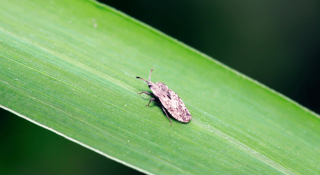
Lace bugs are tiny, plant-feeding true bugs in the insect family Tingidae, named for the intricate lace-like pattern on their clear wings. They feed on the undersides of leaves on shrubs and trees like azalea, rhododendron, and sycamore, draining chlorophyll and leaving a stippled, bleached appearance on the upper leaf surface. They rarely kill established plants but cause disfiguring damage that worsens each year if untreated.
What do lace bugs look like?
Lace bugs are small and easy to miss unless you look closely, usually on the underside of the leaf where they live and feed. The family Tingidae ranges from about 2 to 10 mm depending on species, but the ornamental pests most homeowners deal with run right around 1/8 inch. Here is what to look for at each stage:
- Adults: roughly 1/8 inch long, flat, with ornate, transparent, reticulated (net-like) lace wings and thorax. Depending on the species they range from whitish-tan to darker with smoky brown markings.
- Nymphs: smaller, wingless, and spiny, ranging from colorless to black. They cluster on the undersides of leaves as they develop.
- Eggs: tiny and black, laid along the midrib and veins on the leaf underside, often in crusty brown patches.
The most reliable clue is not the insect itself but what it leaves behind. The undersides of infested leaves are covered in dark, varnish-like or tar-like fecal spots. Those spots are the giveaway, and they are what separate lace bug damage from nearly every lookalike problem.
What does lace bug damage look like?
Lace bugs feed by piercing individual leaf cells and sucking out the contents, including the chlorophyll. This produces a very distinctive pattern of damage:
- Stippling: tiny white, yellow, or silvery dots across the upper leaf surface, the earliest and most recognizable sign
- Bleaching: as feeding continues, the dots merge and the whole leaf takes on a washed-out, bleached, or bronzed look
- Yellowing and browning: heavily damaged leaves turn yellow or brown
- Premature leaf drop: severely affected foliage may fall early
- Tar spots underneath: the dark fecal spots on the leaf undersides confirm the cause
One important detail: on evergreens like azalea, rhododendron, and andromeda, the damaged leaves do not recover. The stippled, bleached foliage stays unsightly and less functional for more than a year, until those leaves are eventually replaced. That is why catching lace bugs early matters so much on broadleaf evergreens.
What plants do lace bugs attack?
Different lace bug species target different hosts, but the pattern across our region is consistent. The broadleaf evergreen shrubs take the worst of it, and several shade trees are affected too.
Most severely damaged (evergreen shrubs):
- Azalea
- Rhododendron
- Andromeda (Pieris)
- Mountain laurel
- Pyracantha
Also commonly affected (trees and deciduous shrubs):
- Sycamore and London plane
- Hawthorn (particularly damaging in the Mid-Atlantic)
- Oak
- American elm
- Cotoneaster and quince
- Cherry, hickory, and mulberry
Here is a pattern I point out to homeowners constantly: lace bug damage is almost always worse on plants growing in full sun. Azaleas and rhododendrons are shade-loving plants, and when they are planted in too much sun, the stress makes them far more attractive and vulnerable to lace bugs. Where you plant these shrubs has a direct effect on how badly they get hit.
Lace bugs vs. lookalikes: getting the diagnosis right
This is where a lot of homeowners go wrong, treating the wrong problem because two very different issues can look similar from a few feet away. Getting the diagnosis right saves you time and money.
Lace bugs vs. spider mites
Both cause fine stippling on leaves, so they are easy to confuse. The difference is on the underside:
- Lace bugs leave dark, tar-like fecal spots on the leaf underside, and you can often find the flat, lacy-winged insects themselves.
- Spider mites leave fine webbing on the undersides and around leaf junctions, with no tar spots. Our post on early signs of spider mites covers how to spot them.
Lace bug damage vs. iron chlorosis
This one fools people all the time. Iron chlorosis, caused by high soil pH locking up available iron, also yellows the leaves of azaleas and rhododendrons. The difference is in the pattern:
- Iron chlorosis produces yellowing between the veins while the veins themselves stay green, and there are no fecal spots underneath.
- Lace bug damage produces stippling and bleaching across the whole leaf surface, with those telltale tar spots on the underside.
If the leaves are yellowing and you are not sure why, our post on why tree leaves turn yellow walks through the full range of causes.
Do lace bugs kill plants?
Lace bugs rarely kill an established, otherwise healthy plant outright. On large shade trees like sycamore and oak, the damage is almost entirely cosmetic and does not threaten the tree's health, so treatment is usually not necessary. The bigger concern is on ornamental evergreen shrubs.
On azaleas and rhododendrons, repeated year-after-year infestations progressively weaken the plant. Each season of heavy feeding reduces the shrub's vigor, and because the damaged evergreen leaves do not recover, the plant looks worse and worse over time. Severe, sustained infestations can eventually weaken a shrub to the point of decline. So while lace bugs are not an emergency, ignoring them on a valued shrub is a slow-motion problem that compounds annually.
How to get rid of lace bugs
Lace bug control works best when you start early and match the approach to the severity. Here are the options, from least to most aggressive:
- Knock them off with water. A strong stream of water directed at the undersides of the leaves removes many adults and wingless nymphs, and the nymphs will not climb back up. This is a good first step for light infestations.
- Insecticidal soap or horticultural oil. These work well on nymphs when applied directly to the undersides of the leaves, where the insects feed. Coverage is everything, since these products only work on contact. Timing matters, so target the early nymph stage.
- Preserve natural predators. Lacewings, assassin bugs, lady beetles, and predatory mites all feed on lace bugs. Avoid broad-spectrum insecticides that wipe out these beneficial insects, since that can actually make lace bug problems worse over time.
- Systemic insecticides for heavy infestations. For severe or recurring problems, a systemic treatment applied to the soil or as a spray provides longer control. These are best applied by a professional who can time and dose them correctly and minimize impact on pollinators and beneficial insects.
Timing is the key to lace bug control. Begin monitoring susceptible plants in early May, and inspect them every couple of weeks through the growing season. The first generation of nymphs in spring is the easiest and most important to knock back, because catching that first wave prevents the population from building through multiple generations over the summer. Waiting until the damage is severe in mid-summer means you are already a step behind.
How to prevent lace bugs
Prevention comes down to keeping susceptible plants healthy and unstressed, plus catching problems early:
- Plant azaleas and rhododendrons in the shade. These shrubs suffer far worse lace bug damage in full sun. Right plant, right place is the single best prevention.
- Keep plants properly watered and fed. Stressed plants are more susceptible. Consistent moisture and appropriate nutrition build resilience.
- Inspect early and often. Check the undersides of leaves starting in early May, especially on plants that have had lace bugs before. Early detection makes control dramatically easier.
- Remove leaves with egg patches. On smaller shrubs, picking off leaves with visible brown egg crusts along the midrib reduces the next generation.
Keeping your shrubs healthy in the first place is the foundation of pest resistance, which is exactly what ongoing plant health care is designed to support.
Frequently asked questions
What are the tiny white spots on my azalea leaves?
Tiny white or silvery spots stippled across the upper surface of azalea leaves are the classic sign of lace bug feeding. Lace bugs pierce individual leaf cells from the underside and drain the contents, bleaching the leaf from below. Flip a leaf over to confirm: if you see dark, tar-like fecal spots and small lacy-winged insects, lace bugs are the cause rather than a nutrient issue or mites.
How do I get rid of lace bugs on azaleas and rhododendrons?
Start by spraying the undersides of the leaves with a strong stream of water to dislodge adults and nymphs. For active infestations, apply insecticidal soap or horticultural oil directly to the leaf undersides where the insects feed, targeting the early nymph stage in spring. For severe or recurring problems, a professionally applied systemic insecticide provides longer control. Begin monitoring in early May, since early treatment is far more effective than waiting.
Will lace bugs kill my plants?
Lace bugs rarely kill an established, healthy plant outright. On large shade trees the damage is cosmetic and usually needs no treatment. On evergreen shrubs like azalea and rhododendron, though, repeated infestations year after year progressively weaken the plant, and the damaged leaves never recover their color. Left untreated on a valued shrub, the problem compounds annually and can eventually cause serious decline.
What is the difference between lace bug damage and spider mite damage?
Both pests cause fine stippling on leaves, but the underside tells them apart. Lace bugs leave dark, varnish-like fecal spots on the leaf underside, and you can often find the flat, lace-winged adults there. Spider mites leave fine webbing instead, with no tar spots. Confirming which pest you have matters, because the timing and treatment differ between the two.
When should I treat for lace bugs?
Begin monitoring susceptible plants in early May and inspect them every couple of weeks through the season. The best time to treat is when the first generation of nymphs appears in spring, since knocking back that early wave prevents the population from multiplying over the summer. Treating early is far more effective and requires less intervention than waiting until damage becomes severe in mid to late summer.
Why do my azaleas keep getting lace bugs every year?
Recurring lace bug problems usually trace back to two causes: the plant is growing in too much sun, and the previous generation's eggs overwintered on the plant. Azaleas and rhododendrons are shade-loving shrubs that suffer far worse lace bug damage in full sun. Overwintering eggs hatch each spring to start a new infestation. Improving the growing conditions and treating the first spring generation breaks that annual cycle.
Catch them early and your shrubs bounce back
Lace bugs are a manageable problem, but only if you catch them before the damage compounds. On a big shade tree, you can usually let them be. On a prized azalea, rhododendron, or mountain laurel, early detection and well-timed treatment make the difference between a shrub that stays beautiful and one that slowly declines year after year. The key is knowing what you are looking at, checking the undersides of leaves in spring, and acting on that first generation.
If your shrubs are showing stippled, bleached foliage and you want to confirm whether lace bugs are the cause, or you want them treated correctly and on the right schedule, our ISA-Certified Arborists at Strobert Tree Services can help. We diagnose the problem, rule out lookalikes like mites and nutrient issues, and build a treatment plan through our plant health care program across Delaware, Pennsylvania, and New Jersey. Call us at 1-800-TREE-SERVICE or request a free consultation online.