Yellow leaves on a tree get your attention fast. They show up without warning, and the first thing most homeowners want to know is whether the tree is dying. Sometimes it is a serious problem. Sometimes it is completely normal. The answer depends entirely on which leaves are yellowing, when it is happening, and what pattern the yellowing follows. After years of diagnosing trees across Delaware and Pennsylvania, I can tell you that yellow leaves are one of the most common calls we get, and they have a wide range of causes that point to very different solutions.
Why are my tree's leaves turning yellow?
Tree leaves turn yellow for many reasons, including overwatering, drought stress, nutrient deficiency, root damage, pest infestation, fungal disease, compacted soil, or natural seasonal shedding. The cause is identified by which leaves are affected, what the yellowing pattern looks like, and whether other symptoms are present. Yellow leaves alone do not mean a tree is dying.
Is yellow leaves always a problem?
Not always. Some yellowing is completely normal and expected. A few situations where yellow leaves are nothing to worry about:
- Fall color. Deciduous trees yellow before dropping their leaves every autumn. If it is September or October and the color is uniform and seasonal, the tree is doing exactly what it should.
- Inner needle drop on evergreens. Pines, arborvitae, and other conifers shed their oldest interior needles every fall. A flush of yellow-brown needles deep inside the canopy in late summer is normal. Yellowing at the branch tips is not.
- Lower leaf shed on deciduous trees. Many trees drop some of their lowest, oldest leaves in midsummer as the canopy matures. A few yellow leaves at the base of the canopy in July is often just normal housekeeping.
- Newly planted trees. Transplant stress commonly causes temporary yellowing in the first growing season as the tree adjusts to its new location.
When to be concerned: yellowing that spreads upward through the canopy, yellowing that appears on new growth, yellowing on specific branches while others stay green, or yellowing accompanied by wilting, spots, or unusual texture on the leaves.
The most common causes of yellow leaves on trees
Overwatering and root rot
Overwatering is the single most common cause of yellow leaves we see in residential landscapes, and it is also the most counterintuitive. When soil stays saturated for extended periods, the roots suffocate. Roots need oxygen to function, and waterlogged soil drives it out. Oxygen-starved roots cannot absorb nutrients or water effectively, even though water is literally surrounding them. The tree responds by yellowing its leaves.
Root rot fungus, particularly armillaria and phytophthora species, often follows overwatering because those pathogens thrive in wet conditions. A tree with root rot typically shows uniform yellowing across the canopy, sometimes combined with wilting even when the soil is wet. Mushrooms at the base of the tree or white fungal material under the bark near the soil line are additional signs. Our post on root rot in trees covers the diagnostic details and treatment options.
Check drainage before adding more water. If the soil around your tree stays wet for more than two days after rain, drainage is the problem, not lack of water.
Drought and underwatering
On the opposite end, drought stress also causes yellowing, and the two are easy to confuse from a distance. Drought-stressed leaves tend to yellow at the edges first and often combine yellowing with scorching or browning at the leaf tips. The leaves may also feel crispy rather than limp. In a heat-stressed tree, yellowing often appears first on the most sun-exposed parts of the canopy.
Delaware and Pennsylvania summers can be unpredictable, and established trees can show drought stress after as little as three weeks without meaningful rain, particularly in compacted urban or suburban soils that do not hold moisture well. How much water a tree actually needs varies by species, soil type, and age. Tree watering bags are a practical solution for newly planted trees that need consistent moisture through their first two summers.
Nitrogen deficiency
Nitrogen is the nutrient trees use most, and when soil nitrogen is low, yellowing is one of the first visible responses. Nitrogen deficiency has a characteristic pattern: it starts on the oldest, lowest leaves and moves upward. The yellowing is typically uniform across the whole leaf rather than appearing in patches or between veins. New growth at the branch tips often stays greener longer because the tree directs whatever nitrogen is available to its newest tissue first.
Turfgrass is a significant competitor for soil nitrogen in residential landscapes. A lawn that surrounds a tree and gets fertilized separately can actually pull nitrogen away from the tree's root zone. Deep root fertilization bypasses this competition by injecting nutrients directly into the root zone under pressure, making it significantly more effective than surface applications for trees growing in turf.
Iron chlorosis
Iron chlorosis produces one of the most visually distinctive yellowing patterns: the tissue between the leaf veins turns yellow while the veins themselves stay green. The contrast between yellow leaf tissue and a network of darker green veins is hard to miss once you know what to look for. Manganese deficiency produces a similar pattern.
Iron chlorosis is usually not a sign that iron is missing from the soil. It is typically a sign that soil pH is too high, making existing iron unavailable to the tree even though it is present. Pin oaks, river birches, and red maples are particularly prone to iron chlorosis in the alkaline soils common near concrete foundations, sidewalks, and driveways, where lime leaches from construction materials over time. Soil testing identifies the pH problem, and treatment involves soil acidification alongside targeted fertilization rather than just adding iron.
Pest pressure
Several common insects cause yellowing by feeding on leaf tissue or by disrupting the flow of nutrients through the tree. The yellowing pattern they produce differs from nutrient deficiencies:
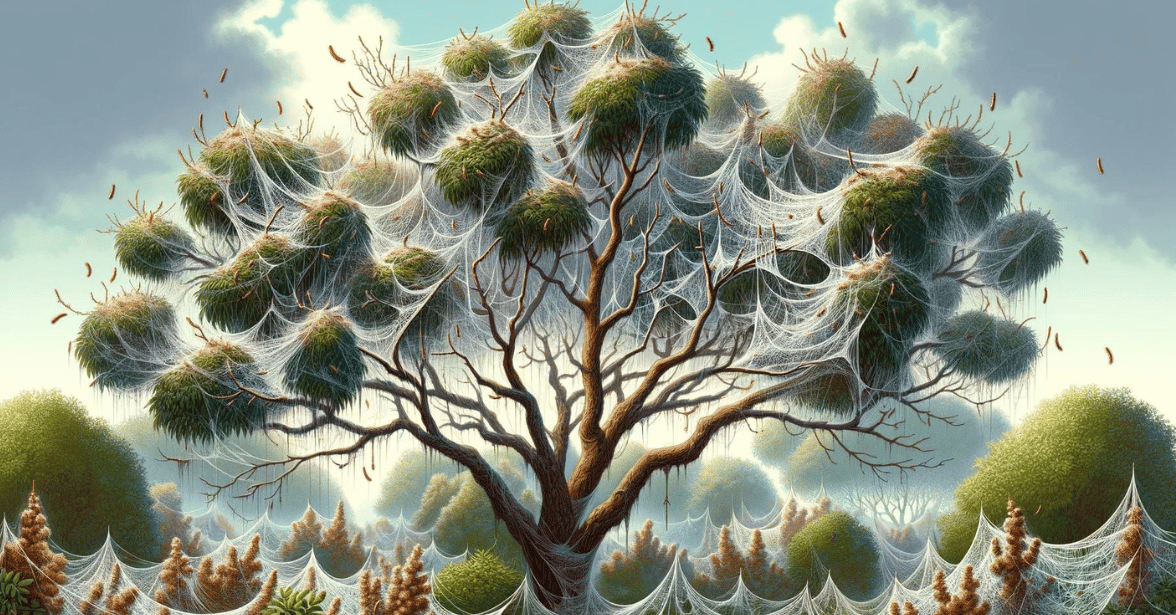
- Spider mites cause a fine stippling or bronzing on leaves, followed by overall yellowing and sometimes webbing on the undersides of leaves. They thrive in hot, dry conditions and can affect large areas of the canopy quickly. Our post on early signs of spider mites covers what to look for before the damage gets severe.
- Aphids cluster on new growth and the undersides of leaves, extracting sap and causing yellowing, curling, and distortion. They also excrete a sticky substance called honeydew that can lead to sooty mold. Getting rid of aphids early prevents the population from exploding through a whole canopy.
- Scale insects attach to bark and branches and slowly drain the tree's vascular system. Yellowing from scale is gradual and often mistaken for general decline. Scale identification and treatment is important because the insects are easy to miss if you do not know what you are looking for.
Fungal disease and vascular wilt
Several fungal diseases cause yellowing by disrupting the vascular system or directly attacking leaf tissue. Verticillium wilt is one of the most damaging: it colonizes the water-conducting tissue of the tree, causing yellowing and wilting on specific branches or one side of the canopy while other parts stay green. Our post on verticillium wilt in Japanese maples covers the condition in detail for one of the most commonly affected ornamental trees in this region, but the disease affects a broad range of species including maples, elms, and dogwoods.
Anthracnose and certain leaf spot diseases also cause yellowing combined with brown spots or irregular blotches on the leaf surface. These diseases are often worse in cool, wet springs and typically show up on the lower canopy first since those leaves are the last to dry out after rain.
Root damage and soil compaction
Roots need oxygen as much as they need water. Soil compaction from foot traffic, vehicles, or construction equipment reduces the pore space in soil that carries oxygen to the root zone. When roots cannot breathe, the whole tree suffers, and yellowing of the canopy is one of the first visible signs. Construction activity within the drip line of a tree is a particularly common cause of yellowing that appears two to four years after the damage occurred, making the connection easy to miss.
Physical root damage from trenching, grade changes, or even aggressive lawn aeration too close to the trunk produces similar results. The relationship between tree roots and surrounding structures is more complex than most homeowners realize, and decisions about root work near a mature tree always deserve careful thought.
Girdling roots
A girdling root is a root that grows in a circular pattern around the trunk, essentially wrapping itself around the tree and slowly constricting the vascular tissue just below the soil surface. This cuts off the flow of water and nutrients between the roots and the canopy. The result is gradual, progressive yellowing and thinning of the canopy over several years, often with one side of the tree declining faster than the other. Girdling roots are common in trees that were pot-bound as nursery stock and planted without correcting the root direction. They are also a frequent cause of unexplained slow decline in trees that otherwise appear healthy.
How to diagnose yellow leaves on your tree
Before calling anyone, take a close look at the pattern. These questions narrow it down significantly:
| What you see | Most likely cause |
|---|---|
| Uniform yellowing, older leaves first, moving upward | Nitrogen deficiency |
| Yellow tissue between green veins | Iron or manganese chlorosis (high soil pH) |
| Yellowing at leaf edges and tips, sometimes crispy | Drought stress or salt damage |
| Yellow leaves on whole canopy, soil consistently wet | Overwatering or root rot |
| Yellow leaves on one side or one branch, rest stays green | Vascular disease, girdling root, or localized root damage |
| Fine stippling or bronzing before yellowing | Spider mites |
| Yellow with brown spots or irregular blotches | Fungal disease (leaf spot, anthracnose) |
| Yellowing with sticky residue or sooty black coating | Aphids or scale insects |
| Uniform seasonal yellowing in fall | Normal senescence |
| Interior needles yellowing on evergreen in late summer | Normal seasonal needle shed |
Frequently asked questions
Why are my tree's leaves turning yellow in summer?
Summer yellowing is most commonly caused by drought stress, overwatering, nutrient deficiency, or pest pressure. Check the soil: if it is bone dry, the tree needs water. If it is consistently wet, drainage or root rot is the likely issue. Yellow between the veins on new growth usually points to iron chlorosis. Spotted or stippled yellowing often means insects or disease.
Can yellow leaves turn green again?
A leaf that has fully yellowed will not revert to green. However, once the underlying cause is resolved, the new growth that follows will be healthy and green. The priority is identifying and correcting the cause so that the rest of the canopy is not affected. In the case of nutrient deficiency, improvement in leaf color can sometimes be seen within weeks of treatment on the same season's growth.
Does overwatering cause yellow leaves?
Yes, and it is one of the most common causes of yellow leaves in residential landscapes. Saturated soil displaces oxygen from the root zone, preventing roots from absorbing water and nutrients even though water is plentiful. The result looks like drought stress from above the ground. If the soil stays wet for more than two days after rain and leaves are yellowing uniformly, overwatering or poor drainage is the most likely explanation.
What nutrient deficiency causes yellow leaves?
Nitrogen deficiency causes uniform yellowing that starts on the oldest lower leaves and moves upward through the canopy. Iron and manganese deficiency produce interveinal chlorosis, where leaf tissue yellows while the veins stay green. Iron chlorosis is common in trees growing near concrete, where lime raises soil pH and locks up available iron. A soil test confirms which deficiency is present and guides the right treatment.
Should I be worried if only one branch is turning yellow?
Yes, isolated yellowing on a single branch or one section of the canopy is more concerning than uniform canopy yellowing because it often points to a vascular issue. Verticillium wilt, a girdling root, or physical damage to the root zone on that side of the tree are common causes. A certified arborist can diagnose whether the problem is contained or likely to spread, and what the treatment options are before the branch declines further.
What should I do about yellow leaves on my tree?
Start with the diagnostic questions: which leaves, what pattern, what time of year, and whether the soil is wet or dry. If the answer points to seasonal change or normal shedding, nothing needs to be done. If the pattern suggests pest, disease, or vascular issues, have a certified arborist evaluate the tree before the problem progresses. An arborist report documents the cause and gives you a clear treatment plan.
Yellow leaves are a symptom, not a diagnosis
This is worth repeating because it changes how you respond. Yellow leaves tell you the tree is under some kind of stress. They do not tell you what kind. Treating the wrong cause, adding fertilizer to a tree with root rot, or cutting back on water to a drought-stressed tree, makes things worse. Getting the diagnosis right first is the only way to actually fix the problem.
Our plant health care team at Strobert Tree Services evaluates trees across Delaware, Pennsylvania, and New Jersey every day. We identify what is causing the stress, whether it is soil-related, pest-related, disease-related, or structural, and recommend a targeted treatment plan rather than a generic spray or fertilizer program. If your tree is showing yellow leaves and you are not sure why, request a free consultation and we will take a look.