Every spring, homeowners spot a strange, scaly shelf growing out of a tree trunk and wonder what it is and whether they should worry. Often, it is dryad's saddle, one of the most common and recognizable fungi you will find on hardwood trees in Delaware and Pennsylvania. It is eye-catching, it is edible when young, and to a forager it is a welcome sight. But to a tree owner, it carries a more important message about what is happening inside the tree. Here is what dryad's saddle actually is, what it means for your tree, and how to handle it.
What is dryad's saddle?
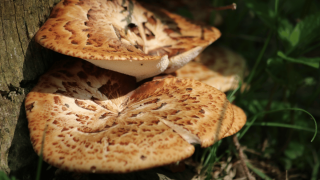
Dryad's saddle (Cerioporus squamosus) is a large, shelf-shaped fungus that grows on the trunks and wounds of hardwood trees. It is easily recognized by its fan-shaped cap covered in dark brown scales arranged like feathers, earning it the nickname "pheasant's back." It is a wood-decay fungus, meaning its presence signals that the tree has internal rot.
How to identify dryad's saddle
Dryad's saddle is one of the easier tree fungi to identify because of its distinctive appearance and timing. Look for these features:
- Shape: a fan-shaped or kidney-shaped bracket that juts out from the tree like a shelf or saddle, sometimes in overlapping tiers
- Size: large, often 8 to 12 inches across and sometimes reaching up to 2 feet on mature specimens
- Cap surface: pale cream to tan, covered with flattened dark brown scales that radiate out from a central point in a feather-like pattern
- Underside: a cream to yellowish-white pore surface with large, angular, honeycomb-shaped pores rather than gills
- Stalk: short, thick, and tough, often black at the base where it attaches to the tree
- Smell: a distinctive odor often compared to watermelon rind or fresh cucumber
- Timing: appears in spring, often around morel season, and again in fall
The combination of the feather-patterned scaly cap, the watermelon-rind smell, and the large honeycomb pores underneath makes dryad's saddle hard to confuse with anything harmful. It is one of a number of shelf fungi you may encounter on trees, and telling them apart matters. Our posts on turkey tail fungus, chicken of the woods, and hen of the woods cover other common bracket fungi and how they differ.
What does dryad's saddle mean for my tree?
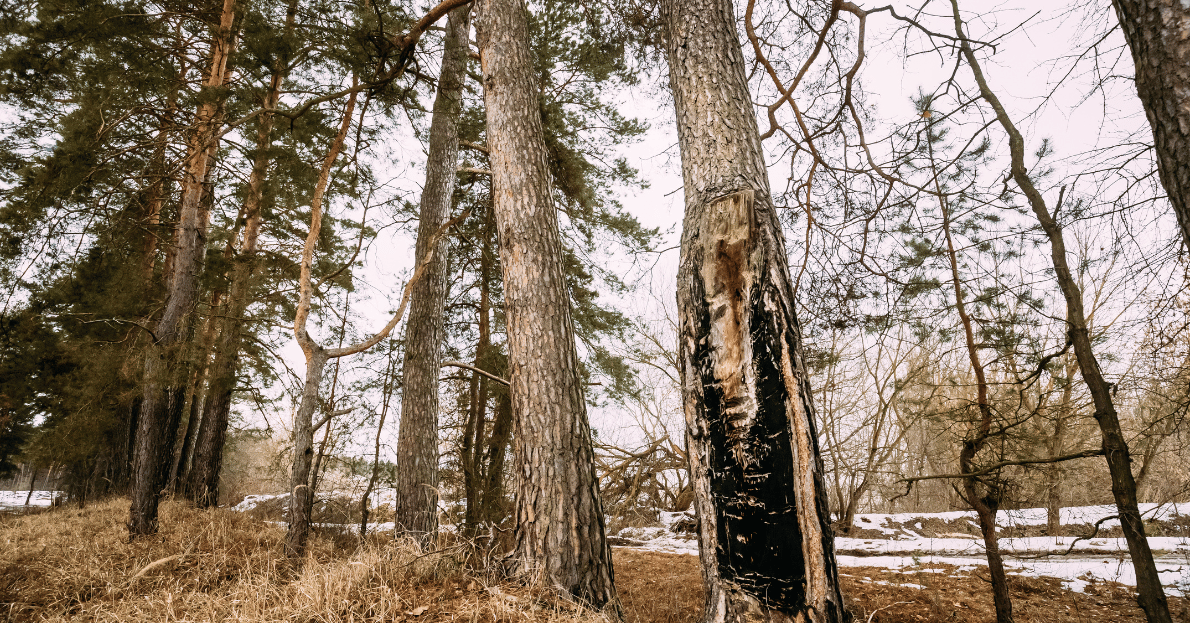
This is the part that matters most for a tree owner. Dryad's saddle is a white rot fungus, which means it breaks down the structural wood of the tree. When you see it fruiting on a living tree, it is a sign that decay is already established inside the trunk or a major limb. The mushroom you see on the outside is only the reproductive structure. The actual fungus has been growing and consuming wood inside the tree, often for a long time before the shelf appears.
The role dryad's saddle plays depends on where it is growing:
- On a living tree, it acts as a parasite, decaying the structural heartwood. This is a genuine concern because it weakens the wood from the inside.
- On a dead tree, stump, or fallen log, it acts as a decomposer, recycling nutrients back into the soil. In this role it is doing beneficial ecological work and is not a threat to anything.
The fungus typically enters a tree through a wound, such as a broken branch, a pruning cut, a frost crack, or storm damage. Once inside, it decays the heartwood over time. In advanced cases, this internal decay can hollow out the trunk enough that the tree becomes structurally unsound and prone to snapping in strong winds. That is why the appearance of dryad's saddle on a living tree should never be ignored, even though the fungus itself looks harmless.
Is dryad's saddle dangerous to my tree?
The fungus is a symptom, not the disease. By the time dryad's saddle fruits on a living tree, internal decay is already present, and the real question is how far it has progressed. A small amount of decay in a large, otherwise healthy tree may not pose an immediate hazard. Extensive decay in the main trunk or at the base of the tree is a serious structural concern that can make the tree a falling risk.
The problem is that you cannot judge the extent of internal decay from the outside. A tree can look perfectly healthy in the canopy while being significantly hollowed out inside. This is exactly the situation our post on how to tell if a tree is rotten inside addresses, and it is why professional assessment matters when a wood-decay fungus appears on a living tree. A tree that has become internally compromised is sometimes called a zombie tree, standing and green on the outside but dangerously unsound within.
How to manage dryad's saddle on your tree
There is no spray or treatment that eliminates a wood-decay fungus once it is established inside a tree. The decay cannot be reversed. Management is about assessing the risk and protecting healthy trees. Here is the right approach:
- Do not ignore it on a living tree. The fungus signals internal decay that needs to be evaluated for structural risk, especially if the tree is near your house, driveway, or an area where people gather.
- Have the tree assessed by a certified arborist. A professional can evaluate the extent of decay, sometimes using specialized tools, and determine whether the tree is still structurally sound or has become a hazard. An arborist report documents the tree's condition and your options.
- Remove and dispose of the fruiting bodies if you want to reduce spore spread to other trees, though this does not cure the existing infection. Do not add the debris to mulch you will use around healthy trees.
- Protect your other trees from wounds. Since the fungus enters through injuries, proper pruning cuts and avoiding bark damage from mowers and equipment reduce the entry points that let decay fungi in. Our post on bad pruning cuts covers how improper cuts create these openings.
- Keep trees healthy and vigorous. A strong, well-maintained tree resists and compartmentalizes decay better than a stressed one. Regular plant health care supports that resilience.
- Consider removal if decay is advanced. If assessment shows the tree is significantly compromised and poses a risk, removal may be the safest option before it fails on its own.
Can you eat dryad's saddle?
Yes, dryad's saddle is edible, and it is popular among spring foragers who often find it while hunting for morels. It is best harvested young, when the flesh is tender and easy to slice. Older specimens become tough and woody. It has a mild flavor sometimes described as floral, with that characteristic cucumber or watermelon-rind aroma. That said, this is a tree care article, not a foraging guide. If you choose to forage any wild mushroom, positive identification by an expert is essential, since mistakes with wild fungi can be dangerous. The value of dryad's saddle to a tree owner is what it tells you about your tree, not what is for dinner.
Frequently asked questions
Is dryad's saddle bad for trees?
Dryad's saddle is a wood-decay fungus, so its presence on a living tree indicates internal rot is already established. It causes white rot, breaking down the structural wood from the inside, which can eventually weaken the tree enough to fail in wind. On a dead tree or stump, it is simply a beneficial decomposer. On a living tree, it should be evaluated by a certified arborist to determine the structural risk.
Should I remove dryad's saddle from my tree?
Removing the visible mushroom does not cure the internal decay, since the fungus lives inside the wood and the shelf is only its fruiting body. You can remove and dispose of the brackets to reduce spore spread, but the real priority is having the tree assessed for structural soundness. If the decay is advanced and the tree poses a hazard, removal of the tree itself may be the safest course.
What tree fungus looks like a pheasant's back?
That is dryad's saddle (Cerioporus squamosus), commonly called the pheasant's back mushroom. The nickname comes from the pattern of dark brown scales on its pale cap, which resemble the feather markings on a pheasant's back. It also has a honeycomb-patterned pore surface underneath and a distinctive watermelon-rind smell, making it one of the more easily identified shelf fungi.
Does dryad's saddle kill trees?
Dryad's saddle does not kill a tree quickly, but the white rot it causes can gradually decay the structural wood to the point where the tree becomes unstable and fails, especially in storms. The greater immediate danger is structural, a decayed tree can drop limbs or snap unexpectedly. This is why a wood-decay fungus on a living tree near your home warrants a professional structural assessment rather than a wait-and-see approach.
What kind of trees does dryad's saddle grow on?
Dryad's saddle grows almost exclusively on hardwood, or broadleaf, trees and rarely on conifers. It has a particular affinity for elm, maple, ash, poplar, willow, walnut, and boxelder. It is common in parks, yards, and along streets, adapting well to urban and suburban environments. It enters through wounds and can continue fruiting on a dead stump or log for several years after the host tree has died.
Can I get rid of dryad's saddle permanently?
There is no fungicide or treatment that eliminates an established wood-decay fungus inside a tree, because the fungus lives within the wood itself. On a living tree, the decay is permanent and progressive. The practical response is to assess the tree's structural condition, protect your other trees from the wounds that let decay fungi enter, and remove the tree if it becomes a hazard. On a dead stump, the fungus will simply run its course as it decomposes the wood.
When a fungus appears, look deeper
Dryad's saddle is a striking and mostly harmless-looking mushroom, but on a living tree it is a window into what is happening inside the trunk. The fungus itself is not the emergency. The internal decay it reveals is what deserves your attention. A tree with established wood rot near your home, driveway, or gathering areas is worth having looked at, because the outside appearance tells you very little about how sound the wood really is.
If you have spotted dryad's saddle or any shelf fungus on a living tree, our ISA-Certified Arborists at Strobert Tree Services can assess the tree, evaluate the extent of any internal decay, and give you an honest read on whether it is still safe or has become a risk. We serve Delaware, Pennsylvania, and New Jersey, and every assessment starts with a real arborist walking your property, not a guess. Call us at 1-800-TREE-SERVICE or request a free consultation online.