Cottonwood trees are common throughout the United States. Their height and quick growth make them easy to see along rivers, fields, and roads. Most homeowners notice them in late spring, when white fluff starts drifting through the air.
But before the fluff appears, the trees bloom.
If you have cottonwoods on your property, knowing their bloom cycle can help you get ready for pollen, seeds, and cleanup. This guide offers practical steps to help you care for your property alongside these impressive trees.
Early Spring Bloom Cycle
Cottonwood trees usually bloom in early spring, most often between March and May.
The flowers show up before the leaves, making them easier to spot on bare branches.
At this stage, the tree grows drooping, catkin-like flowers that hang down from the twigs.
Bloom timing depends on location and weather. Warmer areas may see blooms in early March, while cooler places might not have flowers until late April or early May.
Male vs. Female Cottonwood Trees
Cottonwoods are dioecious, so male and female flowers grow on different trees.
This difference matters because each type has a unique role in the bloom cycle.
Male Trees
Male cottonwood trees produce:
- Reddish or purplish dangling catkins
- Large amounts of pollen released into the air
Pollen is usually released in early spring. The wind carries it to female trees for fertilization.
Male trees do not make the fluffy cotton seeds.
Female Trees
Female cottonwood trees produce:
- Yellow to greenish flowers
- Seed capsules that develop after pollination
After fertilization, the capsules mature and split open later in the season.
This is when the well-known cotton starts to show up.
The “Cotton” Phase: Seed Release
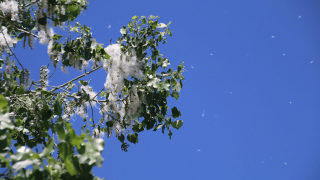
The fluffy white material you see on cottonwood trees is not pollen. It is actually seed fibers made by female trees.
This stage usually happens from May through June, and sometimes into July.
During this period:
- Seed capsules open
- Cotton-like fibers carry seeds on the wind
- A lot of fluff can pile up on lawns, driveways, and gutters
The cotton helps the seeds travel far so they can find moist soil to grow.
The cotton is harmless, but it can be overwhelming if you have many female trees. To handle heavy cotton buildup, rake often or use a shop vacuum for quick cleanups. Regular maintenance keeps your yard tidy during this time.
What Affects Bloom Timing?
Cottonwood blooming and seed release change from year to year. Several environmental factors affect the timing.
Temperature
Warm weather can cause blooms to appear earlier. A mild winter and warm spring days may make flowering start weeks sooner.
Cold springs delay bloom cycles.
Moisture and Soil Conditions
Cottonwoods thrive in moist soils. Trees growing near rivers, ponds, or low areas often bloom vigorously due to strong hydration.
Sunlight Exposure
These trees prefer full sun. Cottonwoods growing in open landscapes bloom more heavily than those shaded by other trees.
Tree Age
Cottonwoods usually begin flowering around 10 years of age. Younger trees will not produce catkins or seeds.
Where Cottonwood Trees Commonly Grow
Cottonwoods naturally grow in:
- Floodplains
- Stream banks
- Wet meadows
- Irrigated landscapes
- Open sunny areas
Because of their fast growth and moisture tolerance, they often appear in residential developments built near waterways.
Are Cottonwood Blooms a Problem?
Cottonwood blooms are natural and beneficial to the ecosystem. However, they can create seasonal inconveniences.
Homeowners may notice:
- Pollen dust during early bloom
- Cotton accumulation on lawns and patios
- Clogged gutters and drains
- Increased cleanup needs
The cotton is not harmful and does not cause allergies. The pollen released earlier in spring is the typical allergen trigger. For homeowners prone to allergies, reducing pollen exposure can help mitigate symptoms. Consider keeping windows closed during peak pollen release periods, using air purifiers indoors, and timing outdoor activities for later in the day when pollen counts are lower.
These small adjustments can provide some relief during the spring season.
Managing Cottonwood Cotton and Debris
While you cannot stop seed release from nearby trees, you can reduce buildup and maintenance issues.
Helpful steps include:
- Cleaning gutters before seed release season
- Using leaf blowers to remove cotton from walkways
- Installing gutter guards to prevent clogging
- Keeping air intake vents clear
- Scheduling seasonal yard cleanup
If cottonwood seedlings begin sprouting in unwanted areas, early removal is important as they grow quickly and develop aggressive root systems. To prevent future problems, homeowners can remove seedlings by hand-pulling or digging them out before they establish deeper roots. The best time for removal is when the soil is moist, as this allows for easier extraction of the entire root system.
Should Cottonwoods Be Removed?
Cottonwood trees provide shade, wildlife habitat, and erosion control. Removal is not always necessary.
However, removal may be recommended when:
- Trees grow too close to structures
- Roots threaten foundations or sewer lines
- Dead limbs create safety risks
- Storm damage weakens the tree
- Excessive cotton creates maintenance issues
Strobert Tree Services' arborists can tell you if trimming, caring for, or removing your cottonwood trees is the best option. ISA Certified Arborists are on our team. This is a certification from the International Society of Arboriculture that shows they have received advanced training and are very knowledgeable about tree care. We are a locally owned and operated business, and we have built our reputation by providing reliable service and making customers happy. People in the area trust Strobert Tree Services to give them good advice and professional care that keeps their trees and property safe.
Professional Tree Care Matters
Cottonwoods grow fast and can reach significant heights. Their size and rapid growth make proper care essential.
Routine professional care can:
- Improve structural strength
- Reduce limb failure risk
- Manage canopy density
- Identify disease or decay early
- Improve overall tree health
Healthy trees are safer and more resilient during storms.
Understanding the Cottonwood Cycle
To recap:
- Cottonwood trees bloom in early spring, usually March through May.
- Male trees release pollen through reddish catkins.
- Female trees develop seed capsules after pollination.
- Cotton-like seeds appear from May through June or July.
- Weather and climate affect bloom timing each year.
Knowing this cycle helps homeowners plan for seasonal changes and maintenance needs.
Call Strobert Tree Services for Tree Healthcare
If you have cottonwood trees on your property, professional care helps keep them safe and manageable.
The ISA certified arborists at Strobert Tree Services provide:
- Tree health assessments
- Pruning and structural care
- Storm damage response
- Safe tree removal
- Preventative maintenance plans
We understand local tree species and seasonal challenges. We provide clear advice and dependable service.
Call Strobert Tree Services today at 1-800 TREE SERVICE to schedule a tree health evaluation and keep your landscape safe, healthy, and well maintained.