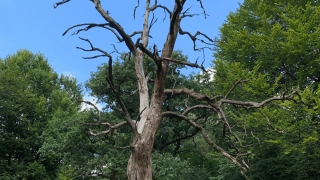
Every spring, homeowners across Delaware and Pennsylvania call us about a tree that has not leafed out yet. The neighbors' trees are green, everything else in the yard has pushed new growth, and this one tree is still sitting there bare. It is an unsettling thing to watch. Sometimes the tree is perfectly fine and just needs more time. Sometimes it is in serious trouble. The difference matters a great deal, and there is a straightforward way to figure out which situation you are dealing with before assuming the worst.
Why is my tree not leafing out in spring?
A tree that has not leafed out in spring is either still dormant, recovering from stress, or dead. The most common causes are late-leafing species traits, winter damage, root stress from the previous season, disease, pest damage, or transplant shock. A scratch test on a small branch determines within seconds whether the tree is still alive.
Start here: the scratch test
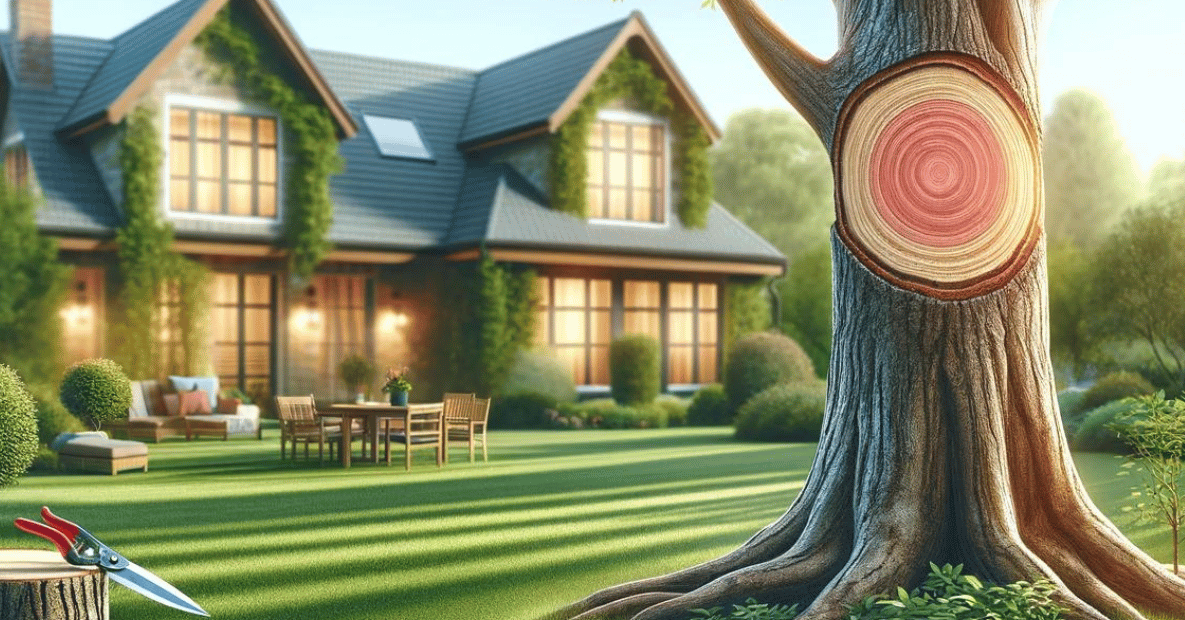
Before drawing any conclusions, do this. Find a branch that is roughly pencil-thickness and scratch through the outer bark with your fingernail or a knife. Look at the layer immediately beneath the bark, which is the cambium. If it is green or white and slightly moist, the tree is alive. That branch has living tissue regardless of whether it has leafed out yet. If the cambium is dry, brown, and papery, that branch is dead. Test several branches in different parts of the canopy and at different heights before making a judgment about the whole tree.
A tree can have dead branches and a living trunk, or a living upper canopy and dead lower branches. The scratch test tells you the status of each branch you test, not the whole tree. Work your way from the branch tips inward toward the trunk to find where living tissue ends and dead tissue begins. Our post on how to tell if a tree is dead covers additional tests beyond the scratch check, including the bend test and what to look for at the root flare.
Reason 1: Some trees just leaf out later than others
This is the most common and least alarming explanation. Not all trees wake up from dormancy on the same schedule. If your tree is one of these species, waiting a few more weeks is often all that is needed:
- Black walnut is one of the last trees to leaf out in the Mid-Atlantic region, sometimes not showing green until late May. It is also one of the first to drop leaves in fall. Homeowners frequently assume something is wrong when it is simply following its natural rhythm.
- Ginkgo leafs out late and does so quickly once it starts. A bare ginkgo in early May in Delaware or Pennsylvania is normal.
- White oak and other oaks tend to push leaves later than red maples or birches, and the timing varies by individual tree and microclimate.
- Catalpa is consistently one of the last shade trees to show leaves each spring.
- Hickory often lags two to three weeks behind maples and elms.
If your tree is on this list and the scratch test shows green cambium throughout, give it more time. Pushing fertilizer or water at a tree that is just naturally slow to wake up does not help and can cause stress.
Reason 2: Late frost or freeze damage
A hard frost after a tree has started pushing new buds can kill those buds without killing the tree itself. When that happens, the tree has to produce a second flush of growth, which takes extra time and energy. The new buds that emerge after frost damage are often smaller and slower to develop than normal spring buds. The tree may look sparse or partially bare through May before filling in.
Frost-damaged buds tend to turn brown and papery at the tips while the branch itself remains alive on the scratch test. If you see dead bud tissue but live cambium underneath, wait. A second flush usually follows within two to four weeks in our region. The tree may look thin for the rest of the season but typically recovers fully by the following year.
Reason 3: Winter damage to the tree's structure
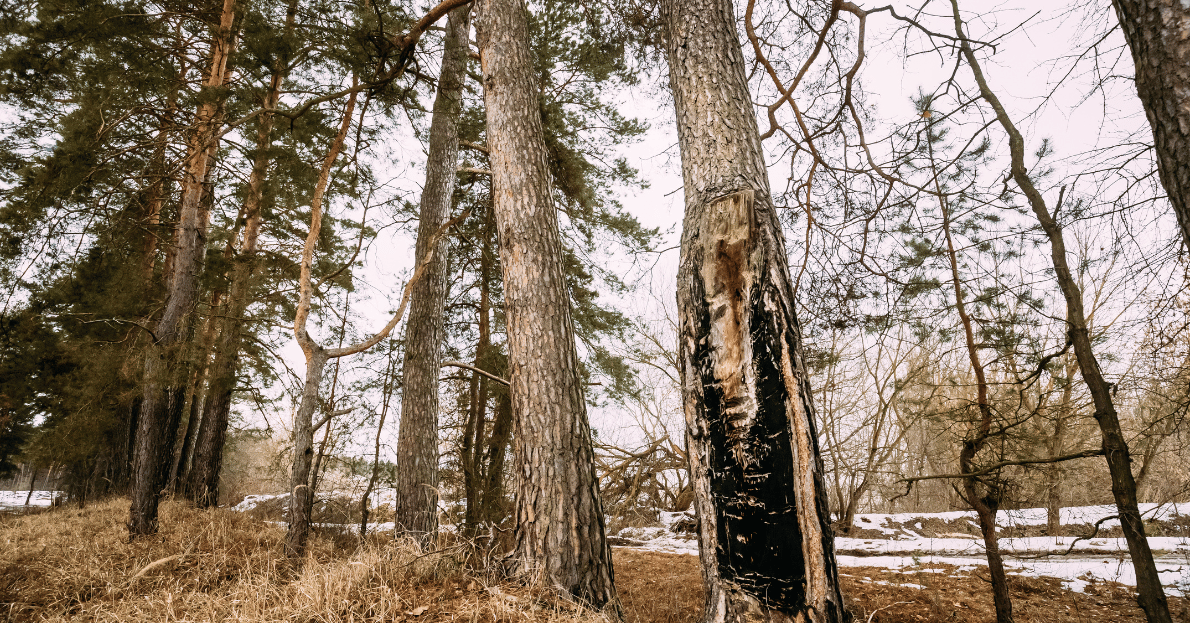
Winter takes a toll on trees in ways that are not always visible from the outside. Ice loading, heavy snow, freeze-thaw cycles, and desiccating winds all stress woody tissue through the dormant season. A branch that looks intact from the ground may have enough internal damage to prevent the buds from opening. Our post on winter tree damage covers the specific injury types to look for.
Evergreens are particularly vulnerable to winter desiccation, where foliage loses moisture faster than frozen roots can replace it. Needles turn brown and branch tips die back. In deciduous trees, winter damage often shows up as branches that fail to leaf out while others on the same tree wake up normally. That uneven pattern of leafing out is the tell. Healthy dormancy is uniform. Damage is patchy.
Reason 4: Root stress from the previous season
What happened to a tree last summer and fall often determines how it comes out of dormancy the following spring. A tree that experienced significant drought stress, root damage from construction, compacted soil, or flooding in the previous growing season may have weakened root reserves that limit its ability to push growth in spring.
Trees store carbohydrates in their root systems through the growing season to fuel the following spring's leaf-out. A summer that drained those reserves, whether from heat, drought, or root damage, means less fuel available when April and May arrive. The tree comes out of dormancy slowly, incompletely, or not at all in severe cases. Our post on heat stress in trees covers the downstream effects of a difficult summer on the following season's growth.
Reason 5: Root rot or overwatering
Root rot from armillaria or phytophthora fungi silently destroys the root system while the tree above ground looks intact through dormancy. By the time spring arrives, there may not be enough functional root tissue left to support leaf-out. A tree with advanced root rot often fails to leaf out at all, or leafs out sparsely in the upper canopy and fails completely in the lower branches.
The challenge with root rot is that the damage is hidden below the soil surface and the symptoms look similar to drought stress from above. Signs that point toward root rot rather than simple drought: mushrooms or fungal bodies at the base of the tree, a sour or musty smell near the root zone, soft or discolored wood at the root flare, or a history of the surrounding soil staying consistently wet. Our post on root rot in trees covers the diagnostic differences and what intervention looks like at various stages.
Reason 6: Vascular disease
Verticillium wilt and other vascular pathogens block the water-conducting tissue inside the tree, preventing the flow of water and nutrients from the roots to the canopy. A tree affected by verticillium often fails to leaf out on specific branches or one side of the canopy while other sections push growth normally. Cross-sections of affected branches show characteristic dark streaking in the wood beneath the bark, a reliable diagnostic sign.
Dutch elm disease and oak wilt work similarly, and both are present in our region. A tree that leafs out normally and then wilts and browns rapidly in late spring or early summer is often displaying the classic vascular wilt pattern rather than a simple dormancy issue. If you see rapid decline after initial leaf-out, particularly on elms or oaks, a certified arborist should evaluate it quickly. These diseases spread, and timing matters for containment.
Reason 7: Pest damage from overwintering insects
Several wood-boring insects overwinter inside tree tissue and continue their damage through late winter and early spring before emerging. Emerald ash borer, bronze birch borer, and various bark beetles disrupt the vascular layer beneath the bark, preventing the flow of water and nutrients to the canopy. A tree with significant borer pressure may fail to leaf out or may push weak, sparse foliage that collapses quickly.
Bark that is cracking, splitting, or showing D-shaped exit holes, along with woodpecker activity on the trunk (woodpeckers excavate wood-boring insects), are signs that borer pressure may be involved. These are not situations where waiting resolves the problem. Early diagnosis and treatment gives infested trees a much better prognosis than waiting for visible decline to make the decision obvious.
Reason 8: Transplant shock in newly planted trees
A tree planted in the previous fall or the prior year may struggle to leaf out due to transplant shock. Moving a tree severs a significant portion of its root system. The tree spends its first one to three growing seasons rebuilding that root mass before it can fully support normal canopy growth. During that establishment period, slow or partial leaf-out in spring is common and does not necessarily mean the tree is failing.
The scratch test is especially important for newly planted trees because transplant stress and tree death look similar from the outside. A transplanted tree with slow leaf-out but green cambium throughout needs water management, mulching, and patience rather than replacement. Our guide on fixing transplant shock covers exactly what the tree needs during this recovery window.
How to diagnose a tree that is not leafing out
| What you observe | Most likely explanation |
|---|---|
| Scratch test shows green cambium throughout; species is known late-leafer | Normal late dormancy; wait |
| Brown papery buds on branch tips; cambium underneath is green | Frost bud damage; expect a second flush |
| Some branches leaf out; others on same tree stay bare | Winter branch damage or early vascular disease |
| Scratch test shows brown dry cambium throughout | Tree is dead; evaluate for removal |
| Sparse leaf-out, soft or discolored wood at base, soil stays wet | Root rot; professional evaluation needed |
| Tree leafs out then wilts rapidly, especially on elms or oaks | Vascular disease; call an arborist promptly |
| Bark cracking, D-shaped holes, or heavy woodpecker activity on trunk | Wood-boring insect damage |
| Tree planted within past two years; slow or partial leaf-out | Transplant shock; scratch test first, then adjust care |
Frequently asked questions
Why is my tree not budding in spring?
A tree that has not budded in spring is either still in dormancy, stressed from the previous season, or dead. Do the scratch test first: scrape a small branch and look for green, moist tissue beneath the bark. Green means alive. Brown and dry means dead. Late-leafing species like black walnut, ginkgo, and catalpa may simply need more time even when other trees around them are fully leafed out.
How long should I wait before deciding a tree is dead?
In Delaware and Pennsylvania, most deciduous trees have pushed significant leaf growth by late May. If a tree shows no buds, no green at branch tips, and brown dry cambium on the scratch test throughout the canopy by late May or early June, it is almost certainly dead. Some slow species warrant waiting until early June before concluding the tree has not survived winter. Do not wait until July before acting, as a dead standing tree deteriorates rapidly and becomes a hazard.
Can a tree recover after failing to leaf out?
Yes, depending on the cause. A tree that failed to leaf out due to frost bud damage, transplant stress, or a difficult previous season can recover fully with appropriate care. A tree with advanced root rot, systemic vascular disease, or complete borer destruction of the cambium layer cannot recover and should be removed before it becomes a structural hazard. The scratch test and a professional evaluation are the tools that tell you which situation you are dealing with.
Should I fertilize a tree that is not leafing out?
Not right away, and not without knowing the cause. Fertilizing a tree suffering from root rot or vascular disease can accelerate the problem rather than help it. If the cause is nutrient stress or root establishment issues in a transplanted tree, targeted fertilization may be appropriate, but the type and timing matter. Deep root fertilization applied by a certified arborist targets the root zone directly and avoids the runoff losses that surface applications suffer, making it the most effective approach when fertilization is genuinely indicated.
What if only half my tree leafed out?
Partial leaf-out, where one side or one major branch structure wakes up while other sections stay bare, usually points to a specific structural issue rather than general stress. Common causes include a girdling root on one side, physical root damage from construction or trenching, early-stage vascular disease progressing up one side of the trunk, or a crack or split in the wood that is not visible from the outside. This pattern warrants a professional evaluation sooner rather than later, as partial canopy failure often signals a problem that will worsen through the season without intervention.
Is a zombie tree the same as a tree that did not leaf out?
Not exactly. A zombie tree is a standing dead tree that looks structurally intact from the outside but has significant internal decay that makes it unpredictable and dangerous. A tree that did not leaf out may or may not be dead. If it is dead and left standing, it can become a zombie tree over time. Our post on zombie trees covers how to identify advanced internal decay and why these trees fail without warning.
When to call an arborist
The scratch test gets you a fast first answer. A certified arborist gets you the full picture. If the scratch test shows mixed results across the canopy, if the tree is large and removing it would be complex, if you suspect disease or pests rather than simple dormancy, or if partial leaf-out is combined with other symptoms like bark changes, oozing, or unusual canopy structure, a professional evaluation is the right next step.
An arborist report documents the tree's condition, identifies the cause of the problem, and outlines your options clearly. It is the most reliable way to know whether you are dealing with a tree worth saving or one that needs to come down before it becomes a safety risk. Either way, you make the decision with accurate information rather than a guess.
Our ISA-Certified Arborists at Strobert Tree Services evaluate trees across Delaware, Pennsylvania, and New Jersey every spring. If you have a tree that has not woken up and you are not sure why, our plant health care team can assess it, and our removal crew can take care of it safely if that is what the situation calls for. Call us at 1-800-TREE-SERVICE or schedule a free consultation online.