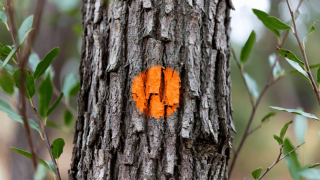
If you see an orange dot painted on a tree, it usually means someone is marking that tree for attention. In many cases, that attention could mean removal, treatment, inspection, or follow-up work by a city crew, forestry department, or utility company. The exact meaning depends on who placed the mark and why. That is why we always tell homeowners not to panic, but also not to ignore it. At Strobert Tree Services, we have seen how confusing these markings can be. Most people want a clear answer right away, especially when the tree is on or near their property.
What do orange dots on trees mean?
An orange dot on a tree often means the tree has been flagged for some kind of work. In many neighborhoods, orange paint can mean the tree is being reviewed for removal or has already been marked as a candidate for removal. In other situations, it may simply mean the tree needs to be checked again by a contractor, municipality, or utility crew. That is why context matters so much. A painted mark on a street tree may mean something different than a painted mark near utility lines, a roadway project, or a wooded property line.
From our side, the smartest first step is to look at the setting. Is the tree near the road? Near power lines? In a public right of way? Near a recent construction site? Those details can help explain why it was marked. If the tree is in poor condition, there is a good chance the orange dot is related to safety, decline, or future removal. If that is a concern, it helps to understand the warning signs that a tree may need to be removed.
Orange paint does not always mean the same thing
This is the part many homeowners miss. Paint colors are not always universal. One town may use orange to mark removals. Another crew may use orange as part of a utility or right of way system. That is why we do not like blanket answers. The mark may be important, but it is not enough on its own to tell the full story.
We have found that homeowners get the best answers when they check who manages the area where the tree stands. If the tree is along the street, it may be a town or borough issue. If it sits close to overhead lines, the utility company may be involved. If it is on private property, it may be worth having an arborist inspect it before making any assumptions. A good place to start is learning how a certified arborist helps maintain healthy trees.
Why trees get marked in the first place
Most painted tree marks are tied to planning and safety. Crews use them to keep track of trees that need work and to make sure the right tree gets the right service. That service might include removal, trimming, structural support, pest treatment, storm response, or a follow-up inspection.
We often see trees marked when they show obvious decline, storm damage, dead limbs, trunk defects, root problems, or disease symptoms. Sometimes the issue is visible to the homeowner. Sometimes it is not. A tree can look alive from a distance and still be structurally compromised. If you are unsure, it helps to read more about how to tell if a tree is dead or when a more formal arborist report makes sense.
Common reasons an orange mark could lead to removal
One common reason is structural failure risk. If a tree has major decay, a split trunk, a failing root plate, or large dead limbs, removal may be the safest option. Another reason is severe pest or disease damage. We see this with ash trees under attack from borers and with species that decline fast once vascular disease takes hold. If you own ash trees, it is worth watching for signs of emerald ash borer. If you have oaks, learn the common signs of oak wilt. Homeowners in our region also deal with a wide range of tree diseases in Delaware and nearby areas.
Another factor is storm history. Trees that have taken repeated hits from wind, ice, or saturated soil often develop hidden weaknesses over time. In those situations, the orange mark may be a step toward cleanup or hazard mitigation. If recent weather is part of the story, our storm damage tree services can help homeowners act quickly and safely.
Sometimes the tree can be saved
Not every marked tree needs to come down. In some cases, a tree may need selective branch removal, health treatment, or structural support instead of full removal. We have worked on many trees that looked questionable at first but improved with the right care plan. That can include targeted tree pruning services to remove weak limbs, improve structure, and reduce risk. It can also include ongoing plant health care to address stress, pests, or disease pressure.
For trees with valuable canopy but weak branch unions or included bark, support systems may help extend the tree’s life. In the right situation, tree cabling services can reduce movement and lower the chance of failure. The key is having the tree evaluated before the problem gets worse.
What homeowners should do if they see an orange dot
First, do not remove the paint and do not assume the mark was made by mistake. Take a clear photo of the tree, the paint mark, and the area around it. Then figure out whether the tree is in a public or private area. If it is in a street strip or public right of way, reach out to the municipality or utility provider that may be involved. If it is on your property, get a qualified opinion from an arborist.
We also recommend looking closely at the tree’s condition. Are there dead limbs? Mushrooms at the base? Bark peeling off? Large cracks? Leaning after a storm? These clues help explain why a tree may have been marked. Homeowners in our service area often find it helpful to learn about local tree risks in Southeast Pennsylvania so they know what problems show up most often.
When timing matters
If the mark is tied to safety, waiting too long can create risk. A tree that has been flagged after storm damage or visible decline may not stay stable for long. On the other hand, if the issue is maintenance or seasonal care, the best timing depends on the species, condition, and type of work needed. Homeowners who want a better sense of scheduling can read more about the best time of year for tree service.
Our advice as arborists
When we see an orange dot on a tree, we do not jump to one answer. We look at the location, the species, the health of the tree, and the likely reason it was marked. That is the right way to approach it. Some trees truly need removal. Others need pruning, treatment, support, or just a second opinion before any major decision is made.
If a tree is beyond saving, safe tree removal services may be the right next step. If it can be preserved, early action usually gives homeowners more options and better results.
If you have a tree with an orange dot and want a clear answer, contact Strobert Tree Services or request one of our free estimates. We can help you understand what the marking may mean, assess the condition of the tree, and recommend the next step based on what is actually happening on your property.