You own the property, you pay the taxes, so you can cut down any tree you want, right? Not always. Homeowners across Delaware and Pennsylvania are surprised every week when they find out a tree on their own land is legally off-limits, or at minimum requires a permit before it comes down. Cut the wrong one without checking first and you could be looking at fines in the thousands, required replanting, or worse. Here is what you actually need to know before any tree work begins.
Which trees are you not allowed to cut down?
There is no single national list of trees you can never touch. Protection comes in layers: federal law, state law, local ordinances, and private agreements like HOA rules. A tree can be perfectly legal to remove in one county and completely off-limits two miles away. The four main categories to understand are federally listed species, state-protected trees, locally protected trees (street trees, heritage trees, and size-threshold trees), and trees restricted by HOA or deed rules.
Federal protection: what the Endangered Species Act covers
The Endangered Species Act of 1973 is the highest level of tree protection in the country. The U.S. Fish and Wildlife Service maintains an official list of endangered and threatened plant species, and trees can appear on it. On federal land, removing a listed species without authorization is illegal, full stop. On private property, protections for plants are slightly weaker than for animals under federal law, but if your state has its own endangered plant statute, those rules can still apply to trees on your lot.
Before removing any rare or unusual tree you cannot confidently identify, check the FWS endangered species list. If there is any doubt, a certified arborist's report can identify the species and give you documentation that protects you legally.
Delaware tree protection: what the state actually requires
Delaware does not broadly regulate tree removal on private residential property at the state level, but several rules do apply depending on where you live and what you are cutting.
Delaware's General Assembly has declared the preservation of pine and yellow-poplar forest resources a matter of public policy. Under state forestry law, pine and yellow-poplar trees designated as seed trees under an approved reforestation plan cannot be cut. This primarily applies to commercial timber operations on ten or more acres of forested land, but it matters if you own rural or wooded property in the state. The Delaware Department of Agriculture's Forest Service has authority to issue cease-and-desist orders and fines up to $2,000 for repeat violations.
For most homeowners, the bigger issue is local. Wilmington's street trees are protected under city ordinance and cannot be removed unless they are hazardous. Those are the trees between the sidewalk and the road, and sometimes a bit beyond depending on the width of the right-of-way. Even though one of those trees might be directly in front of your house, you do not own it. The city does. A free permit from the City of Wilmington is required for any pruning, removal, or root work, and that permit involves a site inspection that takes about two weeks to process. Any tree removed must be replaced.
If you see someone cutting a street tree without a permit, you can report it by calling Wilmington 311 or dialing (302) 576-2620. Our team at Strobert's Wilmington office works within these regulations daily and can help you understand what applies to your specific property.
Pennsylvania tree laws: it depends on your municipality
Pennsylvania does not regulate private property tree removal at the state level. The rules are set by each municipality, and they vary considerably. Rural property owners in unincorporated townships often have very few restrictions. Residents in cities, boroughs, or planned communities are a different story.
Here is a general picture of how permit requirements tend to work across the region:
| Situation | Typical requirement |
|---|---|
| Trees over 12 inches in diameter (Lancaster City) | Permit required |
| Trees over 6 inches in diameter (many municipalities) | Permit often required |
| Trees in the public right-of-way | Permit required in nearly all areas |
| Trees in conservation or historic districts | Special review and approval required |
| Dead trees under 6 inches in diameter | Usually no permit needed |
Philadelphia goes further than most. Its Zoning Code protects heritage trees and requires special approval from the Zoning Board of Adjustment before certain large native trees can be removed, even on private land. Our full breakdown of Pennsylvania tree laws covers this in more detail, and the penalties for cutting a tree without a permit in PA can include fines, restoration costs, and in serious cases, criminal charges.
Heritage trees and landmark trees: the strictest protection
Heritage or landmark trees are individually designated by a city or municipality for their exceptional value. Once a tree gets that status, removing it typically requires a formal permit application, a public review process, and approval that is far from guaranteed. These protections can apply to trees on private property, not just public land. You may have a heritage-designated tree on your lot and not know it.
The criteria for designation usually include some combination of:
- Size, specifically a large trunk diameter relative to the species
- Age, particularly old-growth or century-old specimens
- Historical ties to a notable person, event, or landmark
- Ecological value, such as critical habitat or a rare species for the area
- Visual or cultural significance to the surrounding community
Contact your municipality's urban forestry or planning department to find out if any trees on your property carry heritage or landmark status before planning any removal. This one phone call can save you from a very expensive mistake.
Street trees and right-of-way trees
Even if a tree is physically inside your fence line or growing close to your house, it may technically sit within the public right-of-way. Trees in that zone belong to the municipality, and nearly every local government in Delaware, Pennsylvania, and New Jersey regulates them strictly.
Common rules across our service area:
- No planting, pruning, or removal without a permit
- Work must be performed by or supervised by a certified arborist in most jurisdictions
- Any branch pruning over two inches in diameter typically requires prior approval
- Removed street trees must be replaced, sometimes on a two-for-one basis if the city initiates the removal
If you are unsure whether a tree is on public or private land, call your local Department of Public Works before scheduling any work.
HOA rules and deed restrictions
Even when your city has no restrictions, your Homeowners Association may have its own. Many HOAs require written approval before any tree removal, and some prohibit removing trees above a certain size altogether. Review your CC&Rs before scheduling any tree work. An HOA can levy its own fines on top of whatever the municipality charges, and they can require replanting at your expense.
What are the penalties for cutting a protected tree?
Removing a protected tree without authorization can result in civil fines up to $10,000 per tree. Some jurisdictions calculate fines based on the tree's appraised value and then double it as a penalty. In serious cases, violations can be treated as a misdemeanor with fines up to $15,000 and possible jail time. You will also likely be required to replace the tree, often with multiple new trees, plus any fines your HOA adds separately. The permit process almost always costs far less than the fine. Our tree removal service includes permit compliance on every job, so you never have to navigate the paperwork alone.
When can you remove a tree without a permit?
There are situations where removal may not require a full permit, though the rules vary by location:
- Hazard trees. A tree posing an immediate, documented threat to life or property can often be removed more quickly, but you still need written documentation from a certified arborist. This exception does not override heritage tree protections or HOA rules.
- Dead trees. Many municipalities allow removal of clearly dead trees below the size threshold without a full permit. Some still require notification or a brief inspection. If you are not sure whether yours qualifies, our guide on how to tell if a tree is dead can help you assess before you call.
- Invasive species. Trees like Tree-of-Heaven, Bradford Pear, and Burning Bush are generally not protected by local ordinances. Most invasive species can be removed without a permit, though it is worth a quick check with your local office first.
- Trees below the size threshold. If the trunk diameter measured at 4.5 feet above ground falls below your municipality's cutoff, you usually do not need a permit. Many areas use 6 inches as the threshold, though some use 12 inches.
When in doubt, get it confirmed in writing from your local planning or public works office before anything gets cut.
Which tree species are most commonly protected in Delaware and Pennsylvania?
The exact list depends on your municipality, but these species appear most often in local protection ordinances across the Mid-Atlantic region:
- Oak trees, especially large white oak, red oak, and pin oak specimens
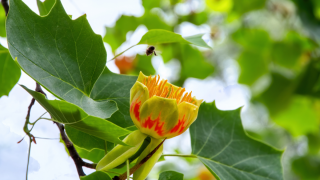
- Tulip poplar (yellow-poplar)
- American beech
- Black walnut
- American elm
- Sugar maple
- Eastern white pine in certain municipalities
- River birch, particularly near waterways
- Bald cypress, which often carries extra protections in wetland-adjacent areas
If you have an older tree you cannot easily identify, have a certified arborist take a look before you do anything. Species identification matters more than most homeowners expect once permits are involved.
Frequently asked questions
Can I cut down a tree in my backyard without a permit?
In unincorporated rural areas of Delaware and Pennsylvania, you often can. In any city, borough, or township, check with your local planning or public works office before removing any tree over 6 inches in diameter. Rules differ significantly from one community to the next, and assuming you are exempt is a costly gamble.
What if the tree is on my property line?
Both neighbors typically share equal rights to a boundary tree. Removing it without your neighbor's agreement can lead to a civil lawsuit, and you could owe damages that include the tree's replacement cost and its appraised ornamental value. Get written consent before any boundary tree is cut, and bring in a certified arborist to document the tree's condition beforehand.
Does a diseased or dying tree still need a permit?
Often, yes. A diseased tree can still be legally protected if it meets local size or species requirements. The right move is to get a professional evaluation first. We can assess the condition, prepare a formal arborist report, and work through the permit process with you. If the tree is clearly dead and below the local size threshold, removal is usually more straightforward.
Can I prune a protected tree instead of removing it?
Yes, and it is often the better option. Proper pruning can address hazardous limbs, improve structure, and significantly extend the life of a tree you might feel is beyond help. That said, heavy pruning of heritage or protected trees can still require a permit in some areas, so check before taking off any major limbs.
Does a tree company handle the permit process, or do I?
A reputable, licensed tree service should verify permit requirements before any removal and ideally handle the application on your behalf. At Strobert, our certified arborists confirm what is required in your specific municipality before we schedule any work. If a company is willing to skip that step and start cutting, that is a red flag worth paying attention to.
What happens if I remove a tree and then find out it was protected?
Contact your municipality right away and be upfront about it. Fines are often reduced for people who come forward compared to those who are reported by a neighbor or inspector. You will most likely owe replacement trees and possibly a fine calculated against the appraised tree value. A certified arborist can help you document the situation and present your case.
Before any tree comes down, work through this list
- Identify the tree species, or have a certified arborist do it for you
- Measure the trunk diameter at 4.5 feet above the ground
- Check with your city, borough, or township for local permit requirements
- Confirm whether the tree sits in the public right-of-way
- Review your HOA documents if you are in a homeowners association
- Get a written arborist assessment for any tree you think may be a hazard
- Apply for permits before any work begins
An experienced arborist can walk through all of this with you in a single visit. It is not as complicated as it sounds when you have someone who does it every day. After a tree comes down, if a stump is left behind, our guide on how soon you can plant after stump grinding is a good next read.
We know the rules in your area
At Strobert Tree Services, our ISA-Certified Arborists work in Delaware, Pennsylvania, and New Jersey every day. We know the local regulations because we work within them on every job. Whether you need to know if a tree can legally come down, want a formal arborist report for a permit application, or are ready to schedule a safe tree removal, we are glad to help. Every job starts with a free estimate and a real conversation with a certified arborist, not a call center. Call us at 1-800-TREE-SERVICE or reach out online to get started.